


Extraction of milk teeth
Removing baby teeth should not be a stressful situation for a child. Often, the procedure can be performed at home, but parents need to avoid traumatising their child either physically or emotionally. And if you can't easily pull out a baby tooth or have other indications, you should definitely consult a professional.
If you are interested in the removal of milk teeth in Kyiv, then make an appointment with a paediatric dentist at the DENTART clinic. We will make sure that the loss of a dental unit does not cause any pain, fear, or other unpleasant experiences.
Make an appointment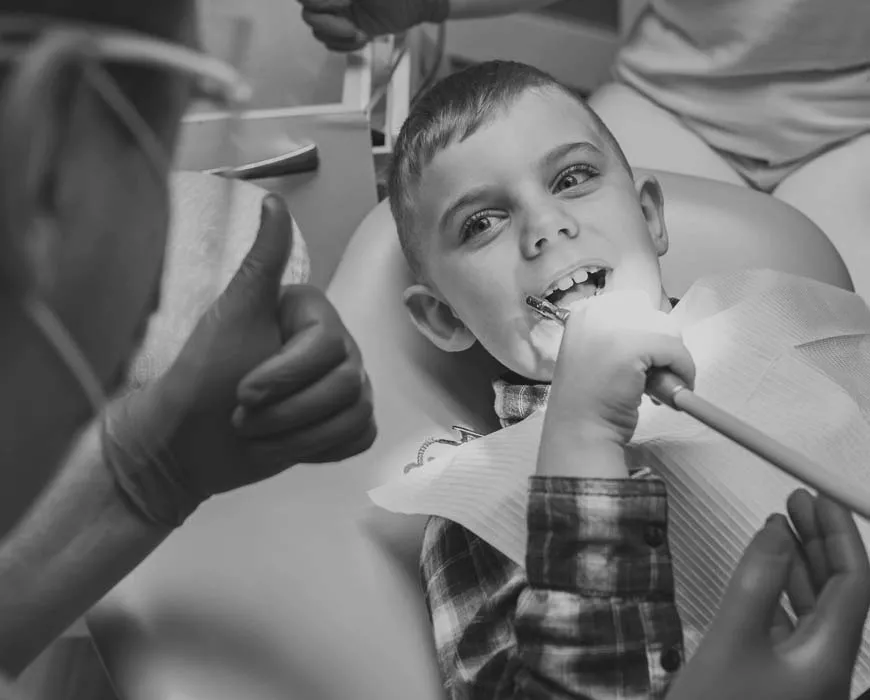
Price


Our doctors
We are a team that loves what we do and genuinely cares about you. It's important to us not only what we do, but how we do it — with warmth, respect, and a sincere desire to make your life better.
All doctors


Indications for the extraction of milk teeth by a doctor
- deep caries that can spread to the rudiments of a permanent tooth;
- lack of natural resorption of the roots of the milk unit, which may be due to malocclusion defects or other reasons;
- prolonged tooth mobility that interferes with the child's speech;
- gum disease;
- tooth injuries, in particular dislocation, root fracture, etc.;
- orthodontic indications for removal, such as angled placement;
- eruption of a permanent unit, provided that the milk tooth is tightly "sitting" in the gum;
- the child's or parent's fear of self-injury.
Features of milk teeth extraction
If the tooth is not very loose, then only a specialist should decide on the need for extraction. The paediatric dentist at our clinic in Kyiv determines the indications and contraindications, and can offer treatment that will help avoid premature loss.
If the root of the tooth has not resorbed, then, for example, the extraction of chewing milk teeth is performed under anaesthesia. In case of complex (long-term) manipulations and/or increased anxiety of the child, sedation may be used. Extraction of milk teeth in children under anaesthesia requires the use of drugs that are safe for the child's body and in properly calculated dosages.
Stages of milk teeth extraction
- an adaptation visit to introduce the child to the doctor and the clinic (if necessary);
- additional diagnostics (if required);
- anaesthesia;
- the actual extraction of the milk tooth using special forceps that protect the germ of the permanent unit from excessive pressure;
- antiseptic wound treatment.
Frequently asked questions from parents about primary teeth extraction
- What kind of anaesthesia is used for the extraction of milk teeth?There are three main options: cooling gels, safe anaesthetics of the latest generation in paediatric dosages (for example, ultracaine), and medication sleep. Cooling is often enough, but everything is individual.
- What is the risk of premature removal of baby teeth?Possible negative consequences of early loss of milk units include the risk of malocclusion and diction problems. And with the loss of chewing teeth, the quality of chewing food may decrease and gastrointestinal diseases may occur.
- How long does it take for the gums to heal after milk teeth extraction?It all depends on the complexity of the extraction. If the tooth fell out almost on its own or with minimal assistance, the gums will not cause discomfort within a few hours. In complicated cases, discomfort may persist for several days.
- Is it possible to eat dairy products after tooth extraction?For the first few hours, it is not recommended to eat at all. There are no further strict contraindications, but after complex removals, the doctor may advise you to refrain from fermented milk products (kefir and yoghurt) for 2-3 days.
When can I pull out a baby tooth at home? How do I do this?
Normally, the replacement of milk teeth with permanent ones does not require medical intervention. And you can get rid of an unnecessary unit at home. Thus, before the eruption of a permanent tooth, the root of the baby tooth resorbs itself. In the anterior units, this process takes place at about 5-6 years, and in the lateral units - at 9-12 years.
When the root is resorbed, the crown part is almost not held in the gum, so it will not be difficult to pull out a milk tooth. Sometimes this is a painless procedure (it falls out while brushing or eating) or with a minimal level of discomfort.
Parents can also help get rid of a loose unit that interferes:
- talk to the child so that he or she is not afraid and does not hinder you;
- start pulling out if you are confident in your actions and are not afraid yourself;
- treat your hands with antiseptic;
- take gauze, also moisten it with an antiseptic;
- taking it through the gauze, pull the loose tooth. Previously, you can make rotational movements, but only if it does not cause pain to the child;
- after tooth extraction, your child should rinse their mouth with boiled water. In case of bleeding, temporarily apply a gauze swab and do not feed the child for several hours after tearing out.
It is better not to remove chewing milk teeth or teeth with advanced caries at home. You need to contact the pediatric dentist of our clinic in Kyiv.


