


Paediatric orthodontics
A pediatric orthodontist is a dentist who corrects bite defects and irregularities of the dentition in children. Treatment usually involves the use of various orthodontic appliances (plates, mouth guards, braces). And the main thing is to choose them correctly and monitor the course of treatment.
Are you interested in bite correction for children in Kyiv? Then contact our DENTART clinic. We use all modern orthodontic devices — aligners, trainers and other removable structures, braces. Our paediatric orthodontist will then perform the necessary diagnostic tests and select the most effective appliances for correcting children's bites.
Make an appointment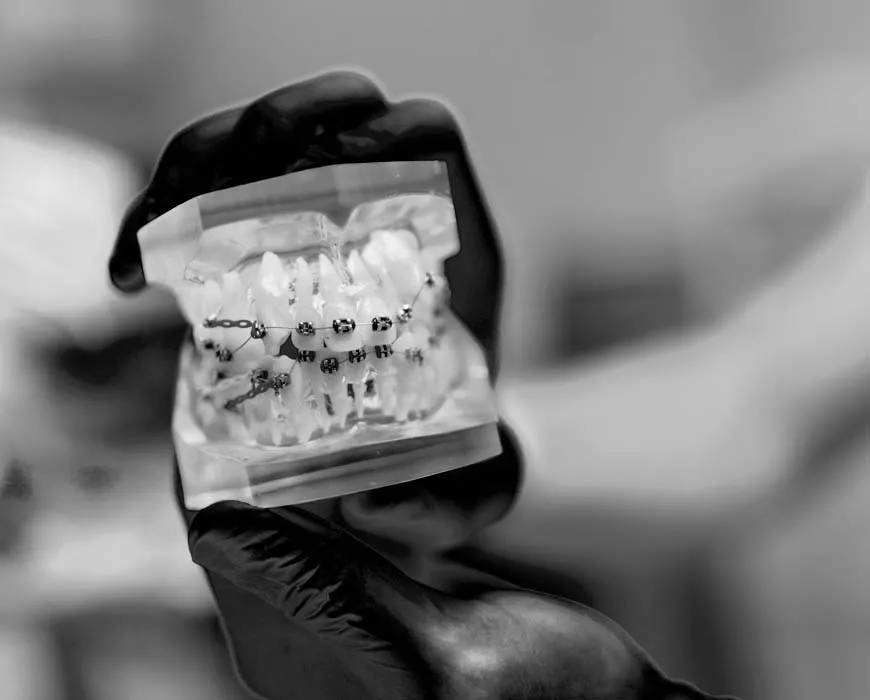
Orthodontic services for children at DENTART
- initial consultation of a pediatric orthodontist;
- a comprehensive diagnosis of the child's oral and maxillary system;
- effective elimination of malocclusions through the use of various appliances, including removable appliances, aligners and various types of braces.
Price
- Initial orthodontic consultation950 UAH
- Comprehensive initial orthodontic consultation (examination, computed tomography, diagnostic digital scanning, consultation, treatment plan development)2400 UAH
- Metal ligature braces system (1 jaw)від 18700 до 28000 UAH
- Ceramic ligature braces system (1 jaw)від 26000 до 27000 UAH
- Metal self-ligating braces system (1 jaw)від 26500 до 37000 UAH
- Ceramic self-ligating braces system (1 jaw)від 33500 до 42000 UAH
- Rapid Palatal Expander (RPE) with Hyrax screw10800 UAH
- Marco Rossa expander12500 UAH
- Haas expander9500 UAH
- Space maintainer appliance3700 UAH
- MSE appliance with micro-implants42000 UAH


Our doctors




How does a paediatric orthodontist's initial appointment at DENTART work?
As part of the initial consultation, a kids orthodontist examines the child's oral cavity, assesses the current development of the dentition and bite. If abnormalities are detected, further examinations may be ordered and treatment prescribed. Its purpose is:
- correcting irregularities that have been detected, such as irregularities in individual teeth;
- correcting a bite, including without the use of braces in the future;
- getting rid of functional impairments that cause abnormal distribution of masticatory loads, cause abnormal wear of teeth, etc.
You can visit the orthodontist with your child for preventive care as soon as the first teeth appear. Dentists recommend that you have your bite checked when all the baby teeth erupt (at 2-3 years of age) or, at the very least, when they start to change to permanent teeth (at 5-6 years of age).
Comprehensive diagnostics in paediatric orthodontics
The orthodontist will also detect obvious malocclusion during the examination. But instrumental diagnostics are essential for selecting an effective treatment, as well as identifying hidden problems. At DENTART Clinic in Kyiv, we carry out the following types of diagnostic tests:
- orthodontic diagnosis, including CT scans, orthopantomograms (panoramic images), TRGs, etc;
- functional orthodontic diagnostics. It allows you to assess the distribution of loads on the jaw joints, identify imbalances in the masticatory muscles, etc. A digital imprint is taken, followed by a three-dimensional model of the dentition;
- diagnosis of a child's sleep disturbance by means of an ambulatory cardio-respiratory analysis.
What devices do we use to correct bite?
Bite correction for children: why is it important?
Bite defects are not only an aesthetic problem, expressed by not the prettiest smile and crooked teeth, but also a serious medical disorder. It increases the risk of dental problems, gum disease, respiratory and digestive problems and postural problems.
Sometimes if an orthodontic problem is identified at an early age, it can be corrected without braces, i.e. faster and cheaper. Sometimes if an orthodontic problem is identified at an early age, it can be corrected without braces, i.e. faster and cheaper.
Make an appointment with our paediatric orthodontist if you notice any of the following disorders in your child:
- some teeth are protruding or pointing inwards;
- there are other irregularities in the dentition;
- a second row of teeth appeared;
- the child closes the jaws incorrectly;
- there are large gaps between the teeth that are not age-appropriate.


