


Treatment of pulpitis in Kyiv
Pulpitis is an inflammatory lesion of the pulp, the soft loose tissue that is found in the tooth cavity. This is where the many nerve endings and blood vessels are located, which is why the pulp is sometimes called the dental nerve. The disease is caused by an infection, which triggers the inflammation. Since pulpitis is most often accompanied by acute pain, a visit to the dentist should not be delayed. Make an appointment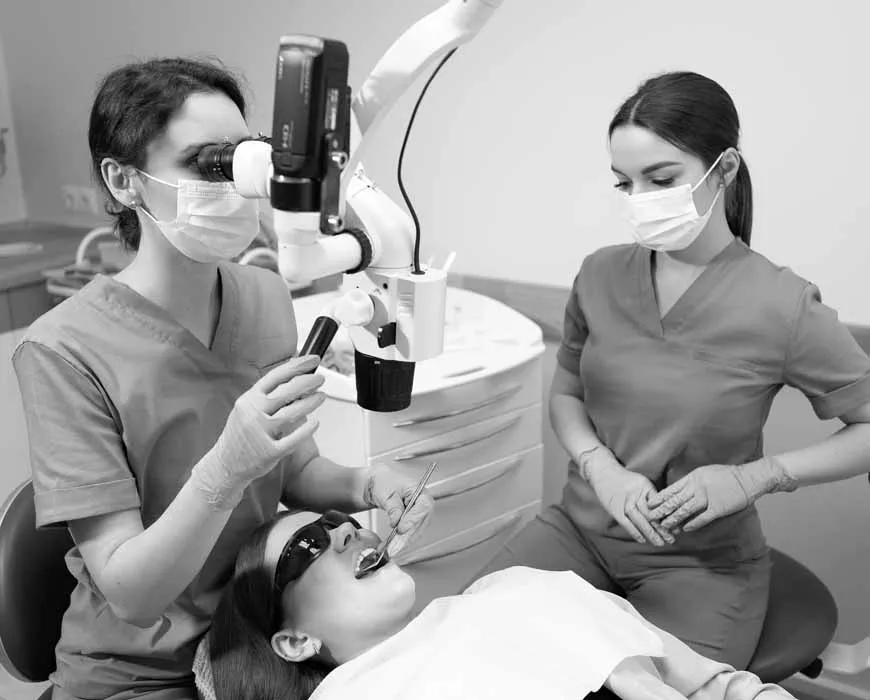
Price
- Initial therapeutic consultation650 UAH
- Single-canal tooth treatment: rubber dam isolation + mechanical and medicinal canal treatment + root canal filling with heated gutta-percha system + temporary tooth restoration + microscope treatment + X-ray control6300 UAH
- Two-canal tooth treatment: rubber dam isolation + mechanical and medicinal canal treatment + root canal filling with heated gutta-percha system + temporary tooth restoration + microscope treatment + X-ray control8750 UAH
- Three-canal tooth treatment (Category 1): rubber dam isolation + mechanical and medicinal canal treatment + root canal filling with heated gutta-percha system + temporary tooth restoration + microscope treatment + X-ray12000 UAH
- Four-canal tooth treatment (Category 1): rubber dam isolation + mechanical and medicinal canal treatment + root canal filling with heated gutta-percha system + temporary tooth restoration + microscope treatment + X-ray14100 UAH
- Retreatment of single-canal tooth: rubber dam isolation + mechanical and medicinal canal treatment + root canal filling with heated gutta-percha system + temporary tooth restoration + microscope treatment + X-ray7750 UAH
- Retreatment of two-canal tooth: rubber dam isolation + mechanical and medicinal canal treatment + root canal filling with heated gutta-percha system + temporary tooth restoration + microscope treatment + X-ray10250 UAH
- Retreatment of three-canal tooth: rubber dam isolation + mechanical and medicinal canal treatment + root canal filling with heated gutta-percha system + temporary tooth restoration + microscope treatment + X-ray13300 UAH
- Retreatment of four-canal tooth: rubber dam isolation + mechanical and medicinal canal treatment + root canal filling with heated gutta-percha system + temporary tooth restoration + microscope treatment + X-ray15100 UAH
- Emergency pain relief, without microscope: anesthesia + medication in root canals + temporary tooth restoration + X-ray control at each treatment stage3700 UAH
Payment in installments

Our doctors
We are a team that loves what we do and genuinely cares about you. It's important to us not only what we do, but how we do it — with warmth, respect, and a sincere desire to make your life better.
All doctors







Symptoms of pulpitis
The main manifestation of pulpitis is acute pain. It is distinguished from other dental diseases by the following features:
- increased pain at night and when lying down;
- pulsating nature of pain;
- soreness may be felt in the ear, other teeth, temple or pharynx;
- there are bouts of pain, with periods without discomfort quickly shortening.
Pulpitis is also accompanied by increased sensitivity to everything hot or cold. If the problem is chronic, the pain may not be severe, but the pulp may bleed and the dentin (the hard dental tissue underneath the enamel) may gradually decay.
Types of pulpitis
There are both acute and chronic pulpitis. The former is often a complication of deep caries, while the latter is a long-term inflammation that lasts from two to three weeks to many months.
An acute lesion, in turn, is also divided into several types:
- focal. Only part of the "nerve" of the tooth is inflamed, and the patient can identify the source of the pain him(her)self, as the pain is felt in a particular tooth;
- diffuse. It occurs after focal inflammation of the pulp when the process begins to spread. The pain radiates to different parts of the head;
- purulent. This is the most complicated form of acute inflammatory pulp infection. Purulent pulpitis may be accompanied by fever, swollen gums and pus. Purulent inflammation can lead to sepsis. A characteristic symptom is an increase in pain when the tooth is exposed to hot or warm food.
There are also three types of chronic pulpitis:
- fibrotic - affected tissue is replaced by connective tissue, and there is a feeling of swelling of the tooth in addition to the symptoms listed above;
- gangrenous - the tissue begins to die off and there is a distinctive bad breath;
- hypertrophic - soft tissue sprouts through the tooth cavity, interfering with chewing and causing bleeding.
Diagnosis and treatment of pulpitis in DENTART
To confirm the diagnosis, in addition to an examination, our doctors also carry out an examination with a CT scanner or a visiograph. These examinations are extremely important when root canals need to be re-treated. In addition, adequate diagnosis is also required in order to detect all root canals, of which there can be 3 to 6, or sometimes even more, in the lateral teeth.
Treatment of pulpitis involves complete removal of the dental nerve, thorough cleaning of the root canals mechanically and chemically, and their closing with gutta-percha (a filling material for root canals), restoring the tooth.
The sequence of actions is as follows:
- anaesthetisation and isolation of the diseased tooth using a latex cofferdam;
- cleaning of all, including the most tortuous and complex canals with removal of nerve endings. The treatment of canals in our clinic in Kyiv is carried out under a microscope;
- flushing the canals with antiseptic solutions;
- closing the root canals with gutta-percha;
- shape restoration with crowns and/or onlays. A full-fledged restoration avoids having to remove the tooth a short time after the pulpitis has been removed.
What should i do if pulpitis started suddenly?
If a toothache occurs at night or during holidays when you cannot immediately go to DENTART for help, the following can help ease the discomfort and reduce the pain:
- rinsing with salt water as a disinfectant. Dissolve half a teaspoon of salt in a glass of water;
- rinsing with hydrogen peroxide. It should be mixed in equal proportions with water. This solution acts in the same way as salt;
- applying cold compresses to the cheek. Cold constricts blood vessels and has an analgesic effect;
- taking painkillers such as ibuprofen, nimesil and their equivalents.
What can not be done for anesthesia:
- heating the inflammation (this will exacerbate the symptoms);
- drinking alcoholic beverages;;
- making compresses or rinse your mouth with alcohol solutions (high risk of burns).
Advantages of pulpitis treatment at DENTART
If you suspect pulpitis, contact our clinic in Kyiv. You will be guaranteed effective treatment at DENTART:
- our team of experienced endodontists;
- a high-precision diagnosis that will rule out other diseases of the tooth;
- modern tools and filling material;
- the use of a cofferdam to isolate the diseased tooth;
- working with magnification (using a microscope);
- effective pain relief, including the ability to perform complex and time-consuming pulpitis treatment in your sleep.
Consult with our specialists over the phone and/or make an appointment online!


