


Invisalign aligners
Invisalign aligners are an exclusive orthodontic treatment system that was created by Align Technology (USA). This innovative development has made it possible to correct the bite and irregularities of dentition in adults and adolescents without the use of fixed structures - braces, which previously had virtually no worthy alternatives. Invisalign are invisible and comfortable aligners that are effective in solving various orthodontic problems. It is the most famous aligner system with an excellent reputation in the world of dentistry.
In our DENTART clinics in Kyiv, we offer Invisalign aligners. Experienced orthodontists have undergone training programmes and special certification, so you can count on predictable high-quality treatment results, avoiding all the inconveniences associated with braces. To find out all the details, we recommend making an appointment with our specialists.
Make an appointment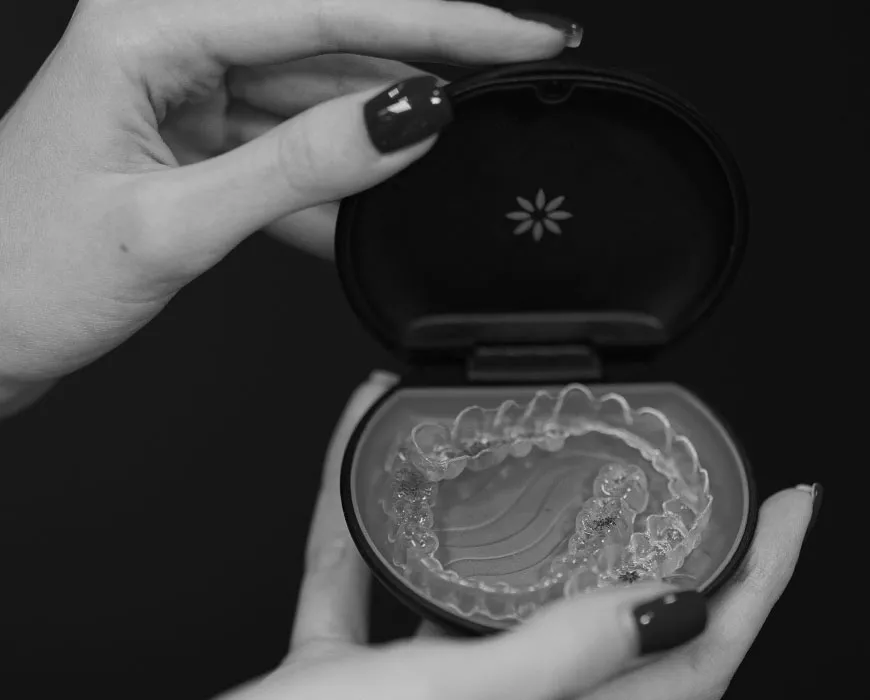

THE MAIN ADVANTAGES OF INVISALIGN ALIGNERS
- Invisibility and aesthetics. Invisalign is almost invisible to others. Most people will not even notice that you are wearing aligners. Accordingly, the aesthetics of the smile does not suffer, which is not the case with treatment with braces.
- High-quality materials of manufacture. Unlike other transparent aligners, Invisalign aligners are made of patented SmartTrack plastic. They are 100% safe, and provide a perfect fit, so you won't feel any discomfort while wearing them.
- Guaranteed results. Aligners are custom-made for a specific patient, they follow the shape of the gum line, and systematically correct dentition irregularities and other bite defects. Invisalign is the most popular system that has proven itself in practice. More than 15 million people in the world, including 3 million teenagers, have received a perfect smile with the help of Invisalign.
- Removable design. Unlike braces, aligners can and should be removed, for example, for eating, drinking sweet beverages, brushing teeth, or other home hygiene. This means there are no restrictions on your diet.
- Comfortable use. Invisalign aligners do not contain metal or other materials that can irritate the gums or oral cavity, rub, etc. As a result, the adaptation period is minimal, and for most patients, it is completely absent (they put on the aligners and almost immediately forget about them).
- Easy oral hygiene. Whereas full-fledged dental cleaning is very difficult with braces, aligners for teeth straightening do not involve such difficulties. Any home and professional care is available to you when using them.


Our doctors




What problems can Invisalign correct?
Common orthodontic indications for invisalign treatment.
- Crowded teeth.
- Bite correction, including:
- deep bite — when the upper teeth excessively overlap the lower teeth;
- open bite — when the upper and lower teeth do not fully contact when the mouth is closed;
- crossbite — asymmetric bite alignment caused by improper positioning of the dental arches;
- distal bite — when the upper jaw or upper teeth protrude significantly forward;
- mesial bite — when the lower jaw protrudes forward relative to the upper jaw.
- Gaps between teeth.
- Mild to moderate tooth movement after tooth loss.
- Moderate tooth rotation and misalignment.
COMPARE INVISALIGN® ALIGNERS WITH BRACES

-
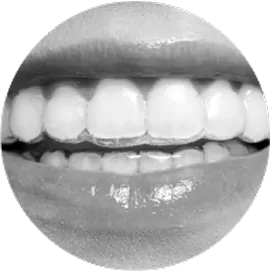
 Invisible to othersAligners are so transparent that they are almost invisible
 -
 They can be removed in 3 secondsFor example, before an important event, brushing and treating teeth, eating
 -
 They save your timeTo monitor the effectiveness of treatment, it is necessary to visit your orthodontist every 6-8 weeks
 -
 Smooth surfaceThey don't cause discomfort and don't injure soft tissues
 -
 Simple hygieneThey do not require additional hygiene
-
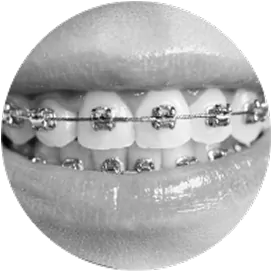
 More visibleBraces are more visible to others
 -
 They are removed by the doctorOnce fixed, they are not removed until treatment has been completed
 -
 Time costsTo monitor the effectiveness of treatment, it is necessary to visit your orthodontist every 4 weeks
 -
 More tangibleBraces consist of arcs and additional elements. Non-removable, palpable in the mouth
 -
 Additional hygieneIt is necessary to perform professional cleaning every 3-4 months
How is teeth straightening done with Invisalign?
Bite correction with Invisalign aligners involves wearing removable transparent aligners. Some sets of these structures are replaced by others as the phased results of orthodontic treatment are achieved. As a result, step by step, the teeth are given the correct position in the dentition.
Invisalign is an individually made structure. First, our orthodontist at the DENTART clinic in Kyiv draws up a treatment plan, and in the dental laboratory, sets of aligners are created according to individual digital impressions. They are made of flexible transparent thermoplastic material - SmartTrack, which is a patented development of the Align Technology company.
Our orthodontist accompanies the patient at every stage of treatment. He controls the process of bite correction by scheduling control visits at intervals of 4 to 6 weeks (or less). The patient himself or herself switches from one set of aligners to another in accordance with the agreed plan. For your convenience, all of them are specially labelled, and if you have any questions, you can always consult with our specialist.
Invisalign packages — Lite, Moderate, and Comprehensive: what is the difference?
Invisalign offers three aligner treatment packages: Lite, Moderate, and Comprehensive. The key differences between these options are outlined below:
Number of aligners: up to 14 pairs.
Case complexity: mild orthodontic cases only.
Treatment duration: approximately 4–8 months.
Recommended for: patients with minor tooth crowding, small interdental spaces, or mild orthodontic relapse following previous braces treatment.
Advantages: a shorter treatment timeline, increased convenience, and a more affordable cost compared to advanced Invisalign packages.
Number of aligners: approximately 20–26 pairs.
Case complexity: moderate orthodontic cases.
Treatment duration: up to 1 year.
Recommended for: patients with moderate crowding, interdental spacing up to 4–6 mm, noticeable tooth misalignment, or mild to moderate bite irregularities.
Advantages: a balanced solution that combines effective orthodontic correction with a moderate treatment duration and cost.
Number of aligners: unlimited (commonly 50+ pairs)
Case complexity: complex and multidisciplinary orthodontic cases.
Treatment duration: approximately 1–2 years or longer, depending on the clinical situation .
Recommended for: patients with severe crowding, open bite, deep bite, crossbite, or cases requiring complex tooth movements and comprehensive bite correction.
Advantages: the most advanced Invisalign treatment option, offering maximum flexibility in treatment planning and the highest level of predictability for achieving the desired clinical result.
How long does it take to straighten teeth with Invisalign?
How long is it necessary to wear aligners during the day? How often is it recommended to replace aligners with a new set?
When invisalign may not be suitable — system limitations
Invisalign aligners may not be suitable for bite correction in the following cases:
- Severe skeletal discrepancies, including pronounced jaw asymmetry, significant overbite) or underbite malocclusions, and similar conditions.
- Edentulism (absence of multiple teeth), where there is insufficient support for predictable movement of the remaining teeth.
- Dental implants in key positions. Since implants are fixed and cannot be moved, they may limit the capabilities of Invisalign treatment. For example, spaces between an implant and a natural tooth may not be fully closed.
- Other complex clinical cases, such as severe tooth rotations, unusual tooth anatomy, short clinical crowns, or extensively damaged teeth.
- Insufficient patient compliance or other factors that prevent wearing aligners for the recommended 20–22 hours per day.
-
What is Invisalign and how is it different from regular aligners?
Invisalign is a premium clear aligner system developed by the American company Align Technology — the world’s first widely recognized alternative to braces for adult orthodontic treatment. One of the key differences between Invisalign and many other aligner systems is the proprietary SmartTrack material used in manufacturing. This advanced medical-grade material provides improved fit, controlled force application, and more predictable tooth movement. Invisalign is also capable of treating a broader range of orthodontic conditions, including certain complex bite irregularities that may not be suitable for treatment with conventional aligners. In addition, the system is supported by extensive clinical research and more than 15 million completed treatment cases worldwide.
-
How often should Invisalign aligners be changed?
In most cases, Invisalign aligners are replaced every 7–14 days. The exact schedule is determined individually by the orthodontist based on the patient’s treatment plan and tooth movement response. Regular aligner changes ensure gradual, accurate, and controlled tooth movement throughout treatment. However, effective results are only possible when aligners are worn consistently for approximately 22 hours per day.
-
What is ClinCheck and can I see the expected results before treatment?
ClinCheck is Invisalign’s advanced digital treatment planning software used to create a personalized orthodontic treatment simulation. One of the main advantages of ClinCheck is the ability to visualize the expected treatment outcome before treatment even begins. Patients can preview how their bite and smile are expected to change throughout the aligner process and compare the projected final result with their current tooth position.
-
Is it painful to wear Invisalign?
No, Invisalign treatment is generally considered significantly more comfortable than traditional braces and does not typically cause severe pain. During the first few days of wearing a new set of aligners, patients may experience mild pressure or temporary discomfort as the teeth begin to move. This sensation is normal and usually subsides quickly. Because Invisalign aligners are made from smooth, polished material, they are gentle on the soft tissues of the mouth and do not irritate the lips, cheeks, or gums the way brackets and wires sometimes can.
-
What are Vivera retainers and are they necessary after Invisalign treatment?
Vivera retainers are removable retention aligners produced by the Invisalign brand. They are used after orthodontic treatment is completed to maintain the achieved results and prevent teeth from gradually shifting back to their original position. Like Invisalign aligners, Vivera retainers are transparent, although they are typically made from a slightly stronger and denser material for long-term retention. Wearing retainers after Invisalign treatment is essential. Initially, they are usually worn for approximately 22 hours per day, followed by nighttime wear only as recommended by the orthodontist.
-
Can I eat or drink while wearing Invisalign aligners?
While wearing Invisalign aligners, patients may drink only plain cool or room-temperature water. Aligners should always be removed before eating or consuming other beverages. Colored drinks may stain the aligners, while hot beverages can deform the material. In addition, chewing food while wearing aligners may damage or crack the trays, potentially affecting the accuracy of tooth movement and overall treatment effectiveness.
-
Is Invisalign suitable for teenagers?
Yes. Invisalign offers specialized treatment options for children and teenagers, including the Invisalign First and Invisalign Teen systems. Invisalign First is designed for younger children during the mixed dentition stage, when both baby teeth and permanent teeth are present. Invisalign Teen is intended for adolescents with a nearly fully developed bite. The Teen system also includes Blue Dot Wear Indicators — small compliance indicators that gradually fade with consistent wear. These indicators help parents and orthodontists monitor whether the aligners are being worn for the recommended amount of time each day.


