


Types of braces
Modern orthodontics offers different braces for bite correction. This allows each patient to choose the optimal brace according to different criteria, including financial possibilities, wearing comfort, aesthetic requirements and/or speed of treatment.
At DENTART Clinic in Kyiv, we use all available braces so you can rely on an effective solution to your bite and tooth curvature problems. Learn more about what options are available and what will work for you. This article will help. However, your orthodontist makes the final decision regarding the choice of braces after an examination and diagnosis.
Make an appointment
Price
- Initial orthodontic consultation950 UAH
- Comprehensive initial orthodontic consultation (examination, computed tomography, diagnostic digital scanning, consultation, treatment plan development)2400 UAH
- Metal ligature braces system (1 jaw)від 18700 до 28000 UAH
- Ceramic ligature braces system (1 jaw)від 26000 до 27000 UAH
- Metal self-ligating braces system (1 jaw)від 26500 до 37000 UAH
- Ceramic self-ligating braces system (1 jaw)від 33500 до 42000 UAH


Our doctors




Types of braces by design features
Ligatures brace system
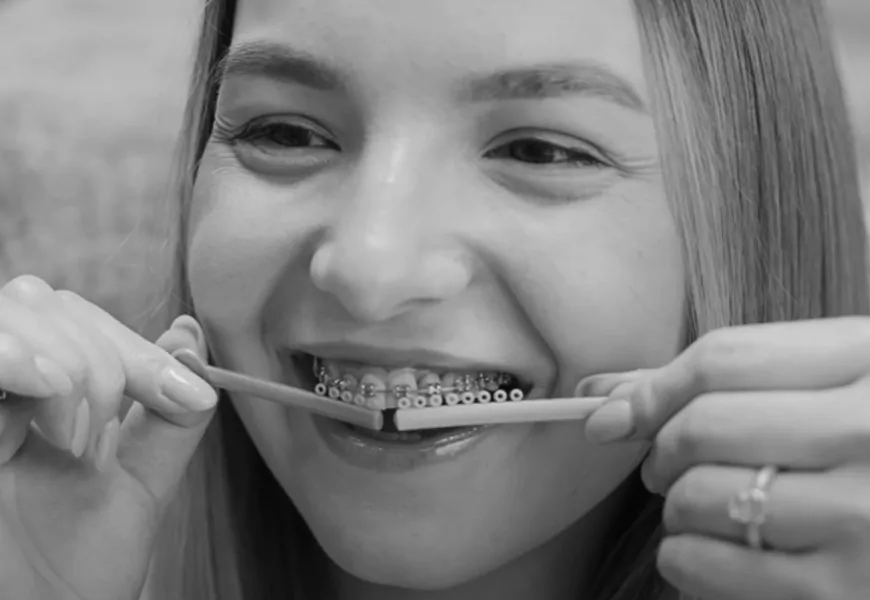
- complex pathology that requires constant monitoring by the doctor (ligature braces are more “controllable” compared to self-ligating systems);
- there are no hygiene and care issues (ligature systems are more difficult and time-consuming to clean);
- there are financial limitations.
Self-ligating braces
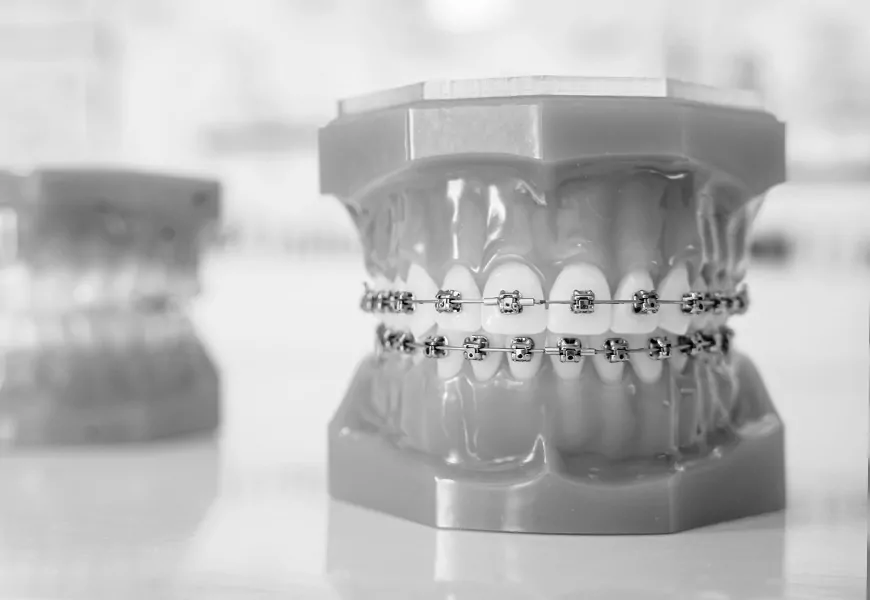
Self-ligating braces are versatile and suitable for almost all patients, but they are more expensive than the ligature braces.
Types of braces according to the method of fixation
In the past, orthodontic appliances were only placed on the outside of the teeth, but today it is possible to hide them. Lingual systems are used for this purpose, and they are concealed behind the teeth. A distinction is made between:
- invisibility and aesthetics are not required;
- You have small teeth that will not allow you to fit lingual systems;
- You have a narrow jaw.
- people in public, for whom a beautiful smile is crucial;
- athletes at risk of facial injuries (external systems are not suitable for them);
- patients with large teeth and/or jaws (who are more comfortable to wear).
Types of braces according to the materials of manufacture
Today, braces are diverse in terms of fabrication materials. The following systems are used:
How are different types of braces chosen
At DENTART, we offer different types of braces as well as alternative orthodontic solutions such as clear aligners. All of these factors help determine which orthodontic system may be most suitable for you. However, the final treatment decision is always made together with the orthodontist after comprehensive diagnostics and treatment planning.
Braces or aligners: which option is right for you
In addition to different types of braces, DENTART also offers aligners for bite correction. Aligners are not a type of braces, but a full alternative orthodontic treatment option in the form of removable transparent trays. To better understand which solution may suit you best, let’s compare them using several important criteria:
- Effectiveness in complex cases
- Aesthetics
- Patient discipline
- Cost
Braces are generally more effective for complex orthodontic problems, including severe crowding, significant bite abnormalities, and skeletal discrepancies. Aligners are less universal and are typically recommended for mild to moderate orthodontic cases.
Aligners have a clear advantage when it comes to appearance. They are thin, transparent, and almost invisible on the teeth. For public-facing professionals and patients who prioritize aesthetics, aligners are often preferred even over ceramic or sapphire braces, which are still more noticeable.
Braces work continuously without requiring active participation from the patient. Aligners, on the other hand, can be removed while eating and brushing teeth, which makes oral hygiene easier and daily life more comfortable. However, successful treatment requires strong self-discipline, since aligners must be worn for 20–22 hours per day.
In most cases, aligners are more expensive than braces because treatment requires advanced 3D planning and the fabrication of multiple custom aligner trays.
There is no single “best” option for everyone. In some situations, aligners may be the better choice — especially when aesthetics and convenient hygiene are the priority. In other cases, braces may be more suitable, particularly for complex orthodontic problems, limited budgets, or patients who may struggle with treatment discipline.
How to choose the right type of braces: step by step
We offer a simple step-by-step approach to help you choose the most suitable orthodontic system at DENTART:
-
What are the differences between various types of braces?
Modern braces mainly differ in two ways: the method used to secure the archwire and the material the brackets are made from. By fixation method, braces are divided into: traditional ligature braces (use elastic ties to hold the archwire in place); self-ligating braces (use built-in clips instead of elastic ties). By material, braces may be: metal, ceramic, sapphire. In all systems, the archwire itself is usually metal. There are also lingual braces, which are attached to the inner side of the teeth and are almost invisible, although today clear aligners are often considered a more comfortable aesthetic alternative.
-
Which braces are the most effective for bite correction?
Metal braces are considered the most effective option. They provide the most controlled impact on the teeth, allowing orthodontists to use them for complex bite problems. At the same time, other types of braces are also highly effective, as they work according to the same principle: a metal archwire moves the dental arch and individual teeth in the required direction. Ceramic braces are also more aesthetic, which can be an extremely important factor for some patients.
-
How many types of braces does DENTART offer in Kyiv?
Today, DENTART offers patients four types of braces for bite correction: traditional ligature braces made of metal or ceramic, and self-ligating braces, also available in metal or ceramic. The best option for you can be determined after a consultation with our orthodontist and comprehensive diagnostics. As an alternative to braces for bite correction, we can also offer clear aligners.
-
Which is better — metal or ceramic braces?
Metal and ceramic braces each have their advantages and disadvantages, and the best system depends on the specific clinical case, the patient’s expectations, budget, and other factors. Metal braces are stronger, easier to care for, more affordable, and usually deliver the desired results faster. They are the better choice when reliability, simplicity, and affordability are the top priorities. Ceramic braces are less noticeable, so if aesthetics are critically important to you, they may be the better option.
-
What is the difference between metal and sapphire braces?
Metal braces differ from sapphire braces in the material used to make the brackets — the elements fixed to the teeth. The archwires are usually the same: metal. Sapphire braces are made of transparent sapphire, making them more aesthetic and less noticeable on the teeth. Metal braces are made of stainless steel: they look more visible and less aesthetic, but they are stronger, easier to maintain, and more affordable. In addition, metal systems are better suited for correcting complex bite problems.
-
Do ceramic braces stain from coffee and food?
Ceramic braces themselves are not prone to staining from food pigments. The ceramic used in these systems is quite resistant to discoloration. Over time, coffee, wine, and sweet drinks may cause slight darkening on metal-free braces, but tooth enamel can also change color slightly. In ceramic braces, the ligatures (elastic bands) and metal archwires, especially those with additional coating, are more likely to stain. However, with good home oral hygiene and timely orthodontic check-ups, this is usually barely noticeable.
-
What is the difference between ligature and self-ligating braces?
The main difference between ligature and self-ligating braces is the way the archwire is fixed. Traditional systems use elastic bands (ligatures), which need to be changed frequently, usually every 3–4 weeks. Self-ligating braces have built-in clips that hold the archwire in place. This design makes them less noticeable, reduces friction, simplifies care, and allows patients to visit the orthodontist less often, usually every 6–8 weeks.
-
Are self-ligating braces better than ligature braces — true or myth?
The statement that self-ligating braces are better than traditional ligature braces is only partly true. Ligature-free systems are more comfortable for the patient, easier to care for, slightly less noticeable, and require fewer check-up visits to the DENTART orthodontist. However, ligature braces are more affordable and, in some cases, allow the doctor to better control tooth movement in complex bite problems. If “better” means more comfortable for you, then self-ligating systems may be the optimal choice. In terms of overall orthodontic effectiveness, both types of braces provide excellent results.
-
Which system should you choose — ligature or self-ligating braces? What does it depend on?
Only an orthodontist can accurately determine which braces you should choose after an examination and diagnostics. In general, if you have a limited budget and are ready for frequent clinic visits, traditional ligature braces may be a good option. They may also be recommended by the doctor if your bite problem requires greater control over tooth movement. Self-ligating braces are better in terms of comfort, often reduce overall treatment time by several months, and require fewer check-up visits.
-
Which is better for adults — braces or clear aligners?
It is impossible to say immediately whether braces or clear aligners are better for bite correction. Everything depends on lifestyle, the complexity of the clinical case, budget, and other factors. Clear aligners are almost invisible, unlike braces, which is important for people with public-facing lifestyles. However, braces are better suited for correcting complex bite problems. Clear aligners can be removed for eating and brushing, but they require discipline and must be worn for about 22 hours a day; otherwise, the expected treatment results may not be achieved. Braces are more affordable but less comfortable to wear and require more frequent check-up visits, especially in the case of ligature systems.
-
Can bite problems be corrected without braces at all?
Yes, modern orthodontics offers adult patients an effective alternative to braces in the form of clear aligners — removable transparent trays. In children and teenagers, some bite problems can be corrected using other appliances, such as trainers, plates, and similar devices. Clear aligners may also be suitable for many patients in this age group. It is also worth noting that minor aesthetic issues, such as slight tooth unevenness, diastemas, or gaps, can be corrected with veneers. However, the optimal method and the most effective alternative to braces can only be determined by a doctor after diagnostics.
-
Self-ligating braces or clear aligners: which are more comfortable to wear?
In terms of comfort, clear aligners are considered the best option. They can be removed for eating and brushing, they are smooth and have no sharp elements, meaning they do not irritate the mucosa. They are also transparent and barely noticeable, which increases everyday comfort during communication and social interactions. Self-ligating braces are less comfortable in these aspects compared to aligners, but they are more comfortable to wear than ligature systems because they apply less pressure and usually allow for fairly quick adaptation.
-
Which braces are better for adults over 30?
To determine the best braces for adults in Kyiv, it is first necessary to undergo diagnostics at DENTART and identify your priorities. The optimal system depends on the complexity of the bite problem, comfort and aesthetic expectations, and budget. If you have a complex clinical case and expect high effectiveness and faster treatment results, especially since tooth movement is slower after the age of 30, metal braces may be the best choice. If aesthetics are the key requirement, ceramic braces may be more suitable. If comfort and fewer visits are a priority, self-ligating braces are recommended. If there are budget limitations, metal ligature braces are a suitable option, although payment in installments and more aesthetic or comfortable braces can also be considered.
-
Which braces are recommended for teenagers aged 12–16?
Different types of braces may be suitable for teenagers, and the best option depends on priorities such as budget, reliability, and aesthetics. In general, metal self-ligating systems are most often recommended for patients aged 12–16. They are strong, better adapted to an active lifestyle and sports, and less demanding in terms of care. Ligature systems are also quite popular, and teenagers are often offered colorful elastic bands that can be changed at each check-up visit for a more personalized look. If the priority is minimal visibility, ceramic self-ligating braces may be considered, although they are more expensive and may be less suitable for correcting complex bite problems.
-
Which braces are suitable for the most complex bite cases?
For complex bite problems, metal braces are considered the most effective system. Their long history of successful clinical use also supports this choice. They provide maximum control over tooth movement, allow orthodontists to work with stronger forces, and are highly compatible with additional elements such as elastic bands or mini-implants. For complex orthodontic treatment, both metal ligature and metal self-ligating braces may be used. The final decision is made by the DENTART orthodontist, taking into account multiple factors, including aesthetic expectations, wearing comfort, cost, and other individual considerations.


