


Aligners (Orthodontic Trays) - Bite Correction Without Braces
If you are interested in the correction of teeth without braces, DENTART clinic in Kyiv provides this opportunity for you. Our certified orthodontists use Invisalign and Orthero Aligners. Your individual mouthguards will make your smile perfect while being unnoticeable to anyone around you!
Make an appointment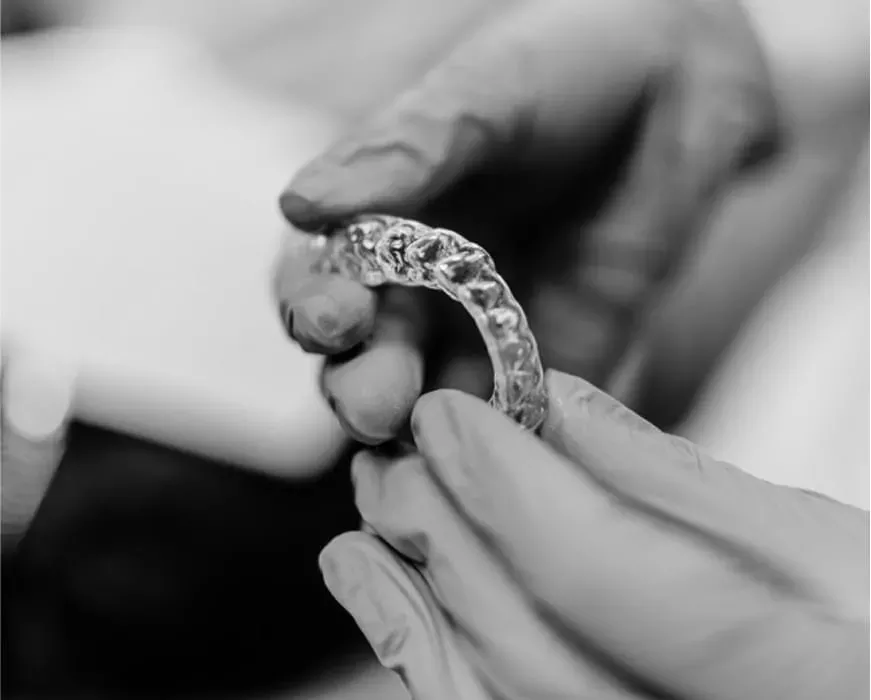
Why choose treatment with invisalign orthodontics at our clinic?
- Performance-oriented work. You get a personal set of Invisalign braces. You can use them as long as it takes to get the desired result in your perfect smile. We offer the required number of mouthguards for each patient.
- Treatment under the supervision of qualified doctors having wide experience with Invisalign.
- Transparency and honesty. Not all bite problems can be solved with Invisalign. We are always honest with patients and offer a dental treatment plan that helps to achieve your goals.
Price
- Initial orthodontic consultation950 UAH
- Comprehensive initial orthodontic consultation (examination, computed tomography, diagnostic digital scanning, consultation, treatment plan development)2400 UAH
- ArtLine alignersвід 38400 до 120000 UAH
- Invisalign alignersвід 200000 до 250000 UAH
- ClearCorrect alignersвід 120000 до 140000 UAH
- CristaLine alignersвід 120000 до 140000 UAH


Our doctors




What are aligners and how do they work?
Aligners are modern orthodontic appliances used to gradually straighten teeth and correct bite irregularities. They are transparent, removable trays that serve as an alternative to traditional braces.
Each aligner is custom-made from medical-grade thermoplastic material based on the patient’s individual treatment plan. The trays are thin, transparent, and virtually invisible when worn, allowing patients to undergo orthodontic treatment without affecting the appearance of their smile. At the same time, the material is durable enough to create gentle, controlled pressure that gradually moves the teeth into the desired position.
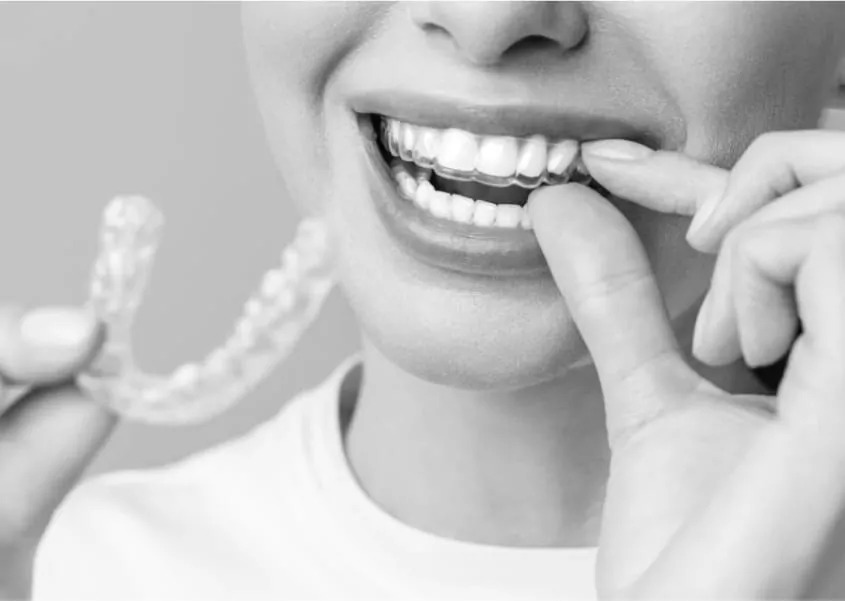
One of the main advantages of aligners is their removability. Unlike braces, aligners can be taken out while eating and during oral hygiene procedures, making daily care more comfortable and convenient. They may also be removed for important meetings or special occasions if necessary. However, to achieve effective and predictable results, aligners should be worn for approximately 22 hours per day. Failure to follow this recommendation may prolong treatment time and affect the final outcome.
How do aligners work? Treatment involves a series of custom-made trays rather than just one pair. Depending on the complexity of the case, the patient may receive anywhere from 15 to 50 or more sets of aligners. Each set is numbered and designed for a specific stage of tooth movement.
Typically, one pair of aligners is worn for about two weeks before being replaced with the next set in the sequence. Each new aligner moves the teeth by only fractions of a millimeter, allowing for gradual, precise, and carefully controlled correction of tooth position and bite alignment.
Stages of treatment with aligners


COMPARE INVISALIGN® ALIGNERS WITH BRACES


-
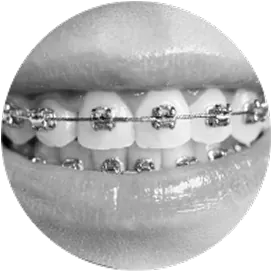
 More visibleBraces are more visible to others
 -
 They are removed by the doctorOnce fixed, they are not removed until treatment has been completed
 -
 Time costsTo monitor the effectiveness of treatment, it is necessary to visit your orthodontist every 4 weeks
 -
 More tangibleBraces consist of arcs and additional elements. Non-removable, palpable in the mouth
 -
 Additional hygieneIt is necessary to perform professional cleaning every 3-4 months
-
 Invisible to othersAligners are so transparent that they are almost invisible
 -
 They can be removed in 3 secondsFor example, before an important event, brushing and treating teeth, eating
 -
 They save your timeTo monitor the effectiveness of treatment, it is necessary to visit your orthodontist every 6-8 weeks
 -
 Smooth surfaceThey don't cause discomfort and don't injure soft tissues
 -
 Simple hygieneThey do not require additional hygiene
Which Aligner System to Choose?
What is good about orthodontic mouthguards?
The use of Invisalign is considered the gold standard in orthodontic treatment when it comes to correcting bites without braces. The main advantages of these dental mouthguards are:
- Transparency and invisibility. This feature is relevant to patients of public professions and people who are anxious about their appearance and the aesthetics of their smile. The very name Invisalign says that they are practically invisible. They are made of pure biological polymer only individually to follow exactly the contours of your teeth and be as invisible as possible.
- The mouthguards create a teeth whitening effect. They make your smile shine as if you had a professional hygiene and whitening treatment.
- No age restrictions. Aligners can be used at any age.
- Easy oral hygiene. Invisalign mouth guards are removed while you eat and brush your teeth. This allows you to keep your mouth clean at home and have it professionally cleaned less often than with braces.
- Convenient visit schedules with our orthodontists. If you wear braces, you have to see a professional every 6-8 weeks.
- No metal. It’s an important plus for people with allergies.
When are aligners recommended?
The indications for orthodontic treatment with Invisalign are:
- severe teeth crowding;
- tremes and diastomas (undesirable large gaps between the teeth);
- preparation for implants and prosthetics;
- any kind of pathological (incorrect) bite;
- temporomandibular joint problems caused by an incorrect bite.
It is important to understand that treatment with Aligners is not always possible. Sometimes the optimal solution is bracket systems. We offer various systems for these cases.
It is your dentist who decides on the appropriate orthodontic treatment method and answers the question if the braces are suitable for you, after an initial examination. You can schedule an appointment with the dentists at DENTART online or over the phone.
Stages of treatment with orthodontic aligners
- During the initial consultation, our doctor evaluates the feasibility of the Invisalign mouth guards.
- Next, an effective diagnostics is made, including facial scans, tomography, necessary impressions and 3D models of your jaws and teeth. This information is sent to an American laboratory, where virtual modeling is performed.
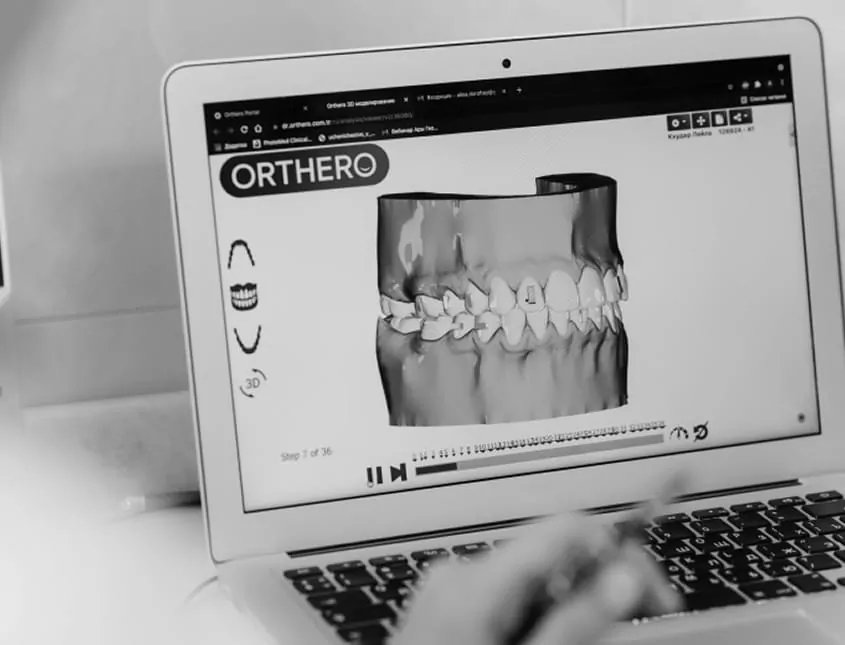
- Our specialists show you a video demonstrating the dynamics of teeth movement during the treatment and the overall timing. So even before you start using Invisalign you know what your smile will look like in future.
- A set of mouthguards is made with an informative numbering. This prevents you from confusion about which one to wear and when.
- The attachments are placed on the tooth enamel before the mouthguard is applied. These are made from a filling material in the color of your teeth and are almost invisible, ensuring that the mouth guards are properly applied to the teeth.
- To monitor the effectiveness of the treatment, you need to visit our orthodontist in Kyiv every 6-8 weeks. Every time you receive new Invisalign orthodontic appliances, moving your teeth to the correct position and gradually approaching a perfect smile.
What Determines the Cost of Clear Aligner Treatment?
Factors affecting the cost of aligner treatment:
- Complexity of the clinical case. One of the primary factors influencing the cost of treatment is the severity of the bite irregularity and tooth misalignment. More complex orthodontic cases require longer treatment duration, more detailed planning, and a greater number of aligners, which directly affects the final cost.
- Number of aligners required. The number of aligners is closely related to the complexity of the case. Comprehensive bite correction often involves multiple stages of tooth movement and may require more than 50 pairs of aligners. In contrast, minor orthodontic concerns — such as a small gap between teeth or mild crowding — may require only 10–15 sets. As a result, the cost of treatment can vary significantly depending on the scope of correction needed.
- Aligner system brand. Different aligner systems vary in terms of technology, clinical research, treatment capabilities, and manufacturing standards. One of the most recognized systems worldwide is Invisalign by Align Technology (USA), considered the gold standard in aligner orthodontics due to its extensive clinical experience and strong evidence-based track record. Another high-quality option is the Angel aligner system, which combines advanced digital treatment planning with predictable clinical outcomes while offering a more accessible price point. ArtLine aligners belong to the more budget-friendly segment and can also provide effective orthodontic correction depending on the individual clinical situation and treatment objectives.
- Materials and manufacturing quality. The quality of materials and production technologies also plays an important role in treatment cost. Leading manufacturers use advanced multilayer thermoplastic materials that combine strength, flexibility, comfort, and aesthetics. Modern digital manufacturing and precision printing technologies further enhance treatment accuracy and predictability, while also increasing production costs.
- Additional factors. The total cost of aligner treatment may also include additional diagnostic procedures, such as CBCT imaging, digital scans, and functional analysis, as well as the use of auxiliary orthodontic elements, including temporary anchorage devices (micro-implants), when required for more complex tooth movements.
Disadvantages of invisalign treatment
A potential disadvantage of using aligners is the direct dependence of treatment effectiveness on your self-discipline. While the fact that the trays can be removed is a huge advantage in most cases - it's more pleasant to eat without them and convenient to brush your teeth - if you take small breaks from wearing Invisalign too frequently, the treatment effect may diminish.
If you follow a fractional nutrition plan and have 5-6 meals per day, you can and should remove the trays, but you must strictly adhere to the aligner wearing schedule. They should be on your teeth for a minimum of 22 hours per day.
-
Is it painful to wear clear aligners?
In most cases, aligner treatment is comfortable and does not cause significant pain. During the first few days after starting treatment — and each time a new set of aligners is introduced — patients may experience mild pressure or tightness on the teeth. This sensation is temporary and usually subsides as the teeth adapt. Unlike traditional braces, aligners are made from smooth medical-grade plastic and do not irritate or injure the soft tissues of the oral cavity.
-
How long does clear aligner treatment take?
The duration of aligner treatment is individual and depends on the complexity of the orthodontic case. On average, treatment lasts from 6 months to 1.5 years. In more complex clinical situations, treatment may extend up to 2 years. The overall timeline depends on the type and severity of bite irregularities, as well as the patient’s individual biological response to tooth movement.
-
Are aligners suitable for children and teenagers?
Yes, aligners can be used for orthodontic treatment in both children and teenagers. Most commonly, they are recommended for young patients who already have the majority of their permanent teeth, typically between the ages of 11 and 13. There are also specialized aligner systems designed for younger children starting from approximately 6–7 years old. However, in more complex orthodontic cases, braces may be a more effective treatment option. It is important to understand that successful aligner treatment requires strict compliance with the recommended wear schedule — approximately 22 hours per day. Younger patients may require parental supervision to maintain this level of discipline.
-
Can aligners be used after dental implant placement?
Yes, aligners can often be used after dental implant treatment, although certain limitations should be considered. Dental implants integrate with the jawbone and remain completely immobile, meaning only natural teeth can be repositioned during orthodontic treatment. If multiple implants are present or located in key functional areas, they may limit the possibility of correcting the bite with aligners. For this reason, the ideal treatment sequence in many cases is orthodontic correction first, followed by implant placement.
-
How many aligners are included in the treatment process?
The number of aligners required is determined individually and may range from 10 to 50 or more pairs, depending on the complexity of the clinical case and the extent of tooth movement required. The exact number of aligners is calculated during the diagnostic and digital treatment planning stage before treatment begins.
-
Are the results of aligner treatment guaranteed?
Successful aligner treatment largely depends on patient compliance. Predictable and stable results can only be achieved if the aligners are worn for at least 22 hours per day, as prescribed by the orthodontist. If aligners are not worn consistently — for example, if patients forget to place them back after meals or fail to follow the scheduled aligner changes — treatment outcomes may be compromised. When treatment protocols are followed correctly, aligner systems provide highly predictable results. Some premium systems, such as Invisalign, may also include an extended clinical warranty, including the possibility of manufacturing additional aligners if the planned outcome is not fully achieved.


