


Self-ligating braces
Self-ligating braces (also called ligature braces) are an effective method of correcting malocclusions superior to ordinary systems in terms of aesthetics, wearing comfort and ease of maintenance. With them, you eliminate the problem faster, and you can visit our orthodontist less frequently.
If you want self-ligating systems for bite correction in Kyiv, address our clinic DENTART. We use ceramic and metal ligature-free braces to offer alternative options for alignment of teeth, including orthodontic mouth guards Aligners.
Make an appointment
What are the advantages of self-ligating braces?
The increasing popularity of these braces is due to their obvious advantages:
- Aesthetic appeal while maintaining full functionality. They are much less bulky and less visible.
- Up to 25% reduction in total wear time. This is achieved by focusing specifically on the problem areas. You will wear self-ligating braces for 3-5 months less than what would be required with conventional ligature counterparts.
- Less pain and more comfort. They exert even pressure on the teeth, and there is no pain or discomfort associated with ligature changes (none).
- Reduced visits to the dentist and quicker treatment procedures. Ligature-free braces require less frequent check-ups and adjustments. The frequency of visits to our clinic in Kyiv will be almost halved, and you will need to visit the orthodontist once in 6 weeks. Changing the bars and other procedures is also sped up, so you do not have to stay at the dentist’s office for a long time.
- Can be fitted in the presence of periodontal disease. Only self-ligating braces are not a contraindication.
In addition, these systems are versatile. DENTART uses both ceramic and metal braces. And almost the only disadvantage of such orthodontic appliances is the higher price compared to ligature braces.
Price
- Initial orthodontic consultation950 UAH
- Comprehensive initial orthodontic consultation (examination, computed tomography, diagnostic digital scanning, consultation, treatment plan development)2400 UAH
- Metal self-ligating braces system (1 jaw)від 26500 до 37000 UAH
- Ceramic self-ligating braces system (1 jaw)від 33500 до 42000 UAH


Our doctors




Self-ligating braces: main features
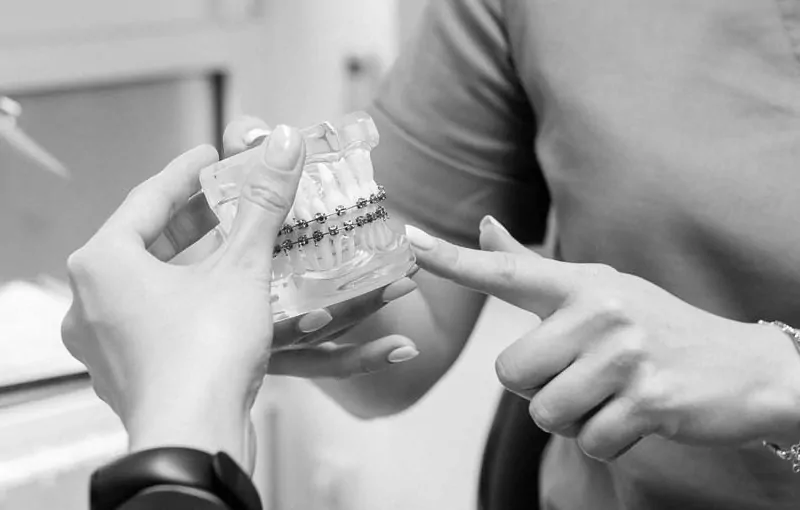
A normal bite aid involves attaching braces to the tooth. These braces are attached to special locks with metal wires and rubber bands (called ligatures), which have a corrective effect. These ligatures become deformed and need to be replaced, which requires frequent visits to specialists.
Self-ligating braces have no ligatures, as their design includes a special clip where the arch is inserted. The latter is not rigidly fixed, so the arch can slide smoothly up and down within the range, acting on the tooth row and moving it in the desired direction. The absence of locks reduces the size of the construction, shortens maintenance intervals, and minimises discomfort during use. The effectiveness of the alignment is even higher than traditional solutions with ligatures.

-
Low archwire frictionThe archwire moves more freely, allowing teeth to shift more gently and efficiently
-
Greater comfortMinimal discomfort and a shorter adaptation period
-
Easier oral hygieneThe absence of elastic ligatures reduces plaque accumulation and simplifies cleaning
-
Shorter follow-up visitsFewer adjustments are required during activation appointments
-
Potentially shorter treatment timeIn many cases, treatment may be completed approximately 3–4 months faster
-
Higher costAdvanced bracket design and locking mechanisms increase manufacturing complexity and cost
-
Higher archwire frictionIncreased pressure on the teeth may cause greater discomfort during treatment
-
Less comfortableElastic ligatures may irritate soft tissues, and pressure after adjustments can feel more noticeable
-
More difficult oral careLigatures tend to trap food particles and plaque around the brackets
-
Longer appointmentsLigatures must be replaced and adjusted at each visit
-
Standard treatment durationOrthodontic correction follows a conventional timeline and often requires more frequent adjustments
-
More affordable optionTraditional braces are generally considered a more budget-friendly orthodontic solution
Metal and ceramic braces without ligatures
DENTART in Kyiv offers two types of self-aligning braces: ceramic and metal. Optimal solution is chosen with our orthodontist, and both variants are good in terms of effectiveness, but the fundamental difference is aesthetics.
Metal appliances are long-lasting and durable, and do not change their initial appearance while in use. They are easy to remove and fix, and are recommended to eliminate complicated bite problems. Metal braces are cheaper than their analogues. Their major disadvantage is their visibility to other people.
Ceramic braces are made from a durable material, with zirconium oxide added to prevent cracking. Ceramic appliances are less noticeable and minimize friction, which speeds up the adjustment. They are more expensive and also slightly inferior to metal ones in terms of durability.
A compromise option may be a combined self-aligning system, where ceramic is used in the smile area and metal is used on the masticatory teeth.
Stages of treatment with self-ligating braces at our clinic
What kind of care is required?
-
What is the difference between active and passive self-ligating braces?
Active and passive self-ligating braces differ in the design of the bracket mechanism that holds the orthodontic archwire. In passive self-ligating systems, the archwire is secured with minimal friction, allowing smoother and more physiological tooth movement. In active systems, the bracket clip applies additional pressure to the archwire, creating greater force and more precise control of tooth positioning. The choice between active and passive systems is determined individually by the orthodontist. In most cases, passive self-ligating braces are preferred during the initial stages of treatment for gentler tooth movement and fewer adjustment visits. Active systems are often used during the final stages of treatment when detailed micro-corrections are required.
-
Which is better — self-ligating braces or aligners?
There is no universal answer, as both treatment options are effective and the most suitable solution depends on the individual clinical case. Self-ligating braces are particularly effective for complex orthodontic problems and provide highly controlled tooth movement. They are also generally more cost-effective compared to aligners. Clear aligners offer superior aesthetics and greater day-to-day convenience, but they are typically more expensive, require strong patient compliance, and may not be suitable for severe skeletal bite abnormalities.
-
How often do I need to visit the orthodontist with self-ligating braces?
Follow-up visits with self-ligating braces are typically scheduled every 4–8 weeks. The exact frequency depends on the complexity of the case and the current stage of treatment. Compared to traditional ligature braces, appointments are usually less frequent and require less chair time.
-
Is it painful to get self-ligating braces?
The placement of self-ligating braces is completely painless, as the procedure does not involve trauma to the teeth or soft tissues. Some temporary discomfort may occur during the adaptation period, especially within the first few days after placement or activation. However, patients generally experience less discomfort compared to traditional ligature braces. The most common sensations are mild pressure and temporary tooth sensitivity rather than actual pain.
-
Are self-ligating braces suitable for adults?
Yes, self-ligating braces are an excellent orthodontic option for adult patients. They can effectively address a wide range of orthodontic concerns, from mild tooth misalignment to complex bite irregularities. Many adults prefer self-ligating systems because they provide improved comfort and require fewer orthodontic visits compared to conventional braces.
-
What should be done after self-ligating braces are removed?
After the removal of any braces system, professional oral hygiene is recommended to remove plaque and residual deposits from the teeth. The next essential stage is retention therapy. Fixed retainers or removable retainers are used to stabilize the achieved result and prevent teeth from shifting back to their original position. Retention is a mandatory part of orthodontic treatment and plays a critical role in maintaining long-term stability.
-
Is installment payment available for self-ligating braces?
Yes. DENTART clinics in Kyiv offer installment payment options for orthodontic treatment, including self-ligating braces. Patients may take advantage of installment programs provided by PrivatBank and Monobank, allowing treatment costs to be divided into convenient monthly payments without hidden fees or additional interest. Installment arrangements can be completed directly at the clinic.


