


Ceramic braces
Using ceramic braces to correct bites makes orthodontic treatment more comfortable for the patient. Such systems are excellent for correcting uneven teeth, but are also more visible and aesthetically pleasing than their traditional metal counterparts.
If you are interested in the correction of bite with the help of ceramic braces in Kyiv, address to our clinic DENTART. Our experienced orthodontists will choose a suitable construction from reputable manufacturers. You can get all the details during the initial consultation, make an appointment online or by phone.
Make an appointment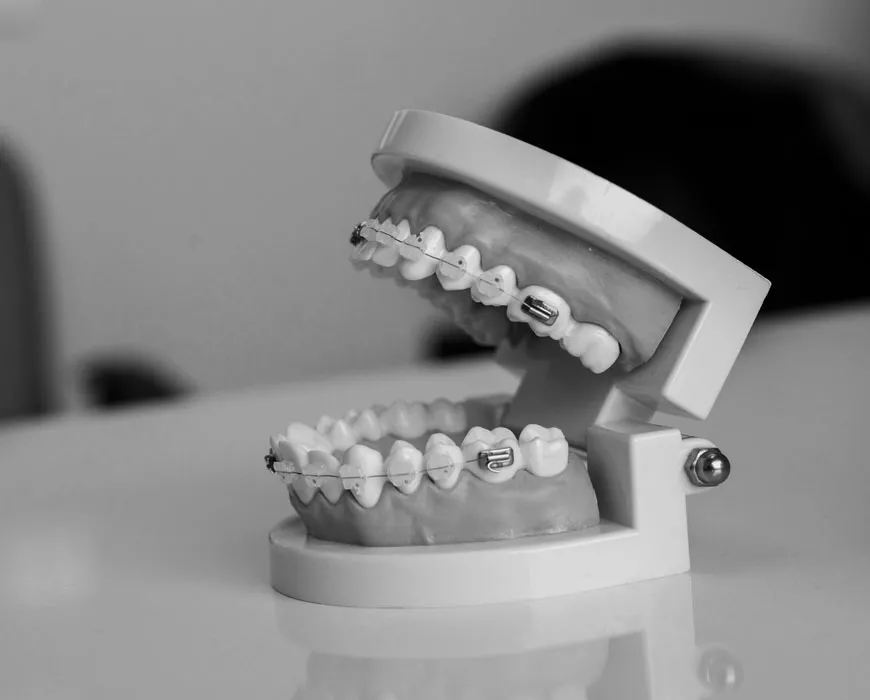
What are ceramic braces and how do they work?
Ceramic braces are a modern orthodontic solution that combines the effectiveness of traditional braces treatment with enhanced aesthetics. Their main difference from conventional metal braces lies in the material of the brackets: instead of metal, the brackets are made from high-quality ceramic designed to closely match the natural shade of tooth enamel. However, the orthodontic archwire remains metal, so the system is considered metal-free only in the bracket area.
The treatment principle is similar to other braces systems. Ceramic brackets are bonded to the teeth and connected with an orthodontic archwire. The archwire applies controlled pressure, gradually moving the teeth into their desired position and ensuring effective bite correction and alignment.
Why choose ceramic braces? The main advantage is aesthetics. Ceramic braces are significantly less noticeable than traditional metal systems, making them a popular option for patients seeking a more discreet orthodontic treatment solution. The ceramic material closely resembles the natural color of enamel, helping the braces blend more harmoniously with the smile.
Another important benefit is stain resistance. Ceramic brackets do not discolor from food or beverages and maintain their appearance throughout the course of treatment. However, it is important to note that the metal archwire and elastic ligatures may gradually change shade over time due to exposure to pigments from certain foods and drinks.
The cost of ceramic braces is generally higher than that of traditional metal braces, which is explained by the more advanced materials and the increased complexity of the manufacturing process.
Price
- Initial orthodontic consultation950 UAH
- Comprehensive initial orthodontic consultation (examination, computed tomography, diagnostic digital scanning, consultation, treatment plan development)2400 UAH
- Ceramic ligature braces system (1 jaw)від 26000 до 27000 UAH
- Ceramic self-ligating braces system (1 jaw)від 33500 до 42000 UAH


Our doctors




Types of ceramic braces
Modern braces comprise braces (locks) and a power arch. When worn, the latter slowly acts on the teeth, forcing them into the correct position. As a result, both the irregularity of individual teeth and more serious bite problems are corrected.
To make ceramic, not metal, braces complement the design less visible, metal bars. The latter are the same colour as your teeth, so they blend in and are virtually invisible to others. Apart from this, we at DENTART in Kyiv use two types of systems, namely:
How are ceramic braces different from metal braces?

-
More aesthetic and less noticeableCeramic brackets closely match the natural color of tooth enamel, making them blend more naturally with the smile.
-
More comfortable to wearSmooth ceramic brackets are gentle on the lips and cheeks and are less likely to irritate the soft tissues of the mouth.
-
Higher costCeramic braces are more expensive because they are made from advanced aesthetic materials and require a more complex manufacturing process.
-
More delicateCeramic brackets are less strong than metal and may chip or crack under strong pressure.
-
Do not stain easilyCeramic brackets keep their original color and are resistant to staining from food and drinks.
-
More visibleMetal brackets are easily noticeable due to their metallic appearance and shine.
-
Less comfortable during adaptationMetal braces may cause irritation or rubbing on the lips and cheeks, especially during the first days after placement.
-
More affordable optionMetal braces are one of the most budget-friendly and cost-effective orthodontic treatment options.
-
Highly durableMetal braces are very strong and can easily withstand daily chewing forces and orthodontic pressure.
-
Easy to care forMetal braces are strong and practical for daily use, although elastic ties may become slightly discolored over time.
Pros and cons of ceramic braces
Ceramic braces are gaining popularity today. This is because of the obvious advantages of these orthodontic appliances:
- Excellent aesthetics. Ceramic locks blend in with the tooth enamel and are therefore virtually invisible to the outside world. In addition, the colour of the ceramic remains unaffected over the entire period of use.
- Comfort of wear. The compact size and smooth surface of the ceramic locks make them comfortable to wear. The high aesthetic appearance also contributes to psychological comfort.
- Quick adaptation. The change period to ceramic braces lasts from 3 to 5 days. As our experience shows, there is no long-term soreness or dyspnoea.
- High efficacy. Ceramic systems allow the removal of most dental defects. They effectively move teeth and correct the bite.
The disadvantages of ceramic are that it is not as strong as its metal or sapphire counterparts. Ceramic braces are more expensive than metal models. But if you are looking for the best option in terms of cost, aesthetics and treatment performance, ceramic systems are the best choice.
Installation of ceramic braces
The process of orthodontic treatment involves several essential steps. Prior to the application of ceramic braces, the following steps are necessary:
- Undertake a dental-alveolar diagnosis and determine the appropriate type of restoration for the patient’s bite.
- Dental treatments for dental diseases and professional oral hygiene.
- If necessary, consult with allied dentists, including surgeons.
The actual placement of ceramic braces at DENTART takes less than an hour. The procedure is painless and does not cause much discomfort:
- First, a rotator spreader is fitted, which means the patient does not have to exert any effort to keep his or her mouth open;
- The tooth row is treated with a special gel to ensure the braces are securely in place;
- Braces are placed on all teeth, and the position of each tooth is calculated by our orthodontist. As a result, the teeth will be moved in the correct direction while the braces are being worn;
- An arch is fitted, and the method of fixation depends on the type of bracing (ligature or non-ligature);
- If necessary, cheek rings and locks are placed on the masticatory teeth.
Afterwards, our doctor will advise you on the rules and care recommendations. He or she will also arrange a next appointment to assess your treatment and correction.
-
What is the difference between traditional and self-ligating ceramic braces?
The main difference is how the wire is attached to the braces. Traditional ceramic braces use small elastic bands to hold the wire in place, while self-ligating ceramic braces have special built-in clips. Self-ligating systems are usually smaller, more comfortable, and less noticeable on the teeth. Patients also tend to get used to them faster because they create less pressure during treatment. Traditional ceramic braces are usually more affordable, but they require more frequent visits to the orthodontist and are slightly harder to clean. The elastic bands may also become stained from coffee, tea, or certain foods over time.
-
Can ceramic braces stain from coffee, tea, or turmeric?
Ceramic brackets themselves are resistant to staining and usually keep their original color throughout treatment. However, other parts of the braces — such as elastic bands and metal components — may slightly darken over time, especially from coffee, tea, red wine, or foods with strong pigments like turmeric. With self-ligating ceramic braces or regular replacement of elastic bands, staining is usually minimal.
-
Which is better — ceramic braces or aligners?
There is no one perfect solution for everyone. The best option depends on your bite, tooth position, and treatment goals. Aligners are usually more comfortable and almost invisible, making them a good option for mild orthodontic problems. Ceramic braces are often recommended for more complex cases because they provide very precise and predictable tooth movement. The orthodontist will recommend the most suitable option after diagnostics and examination.
-
How long does treatment with ceramic braces take?
On average, treatment with ceramic braces takes between 1.5 and 2.5 years. The exact treatment time depends on the complexity of the bite problem and the type of braces used. Self-ligating ceramic braces may shorten treatment time by several months compared to traditional systems. After braces are removed, a retention phase is still necessary to maintain the achieved result.
-
How often do I need to visit the orthodontist with ceramic braces?
Most patients visit the orthodontist every 3–8 weeks during treatment. With traditional ceramic braces, appointments are usually needed more often — about once a month. Self-ligating ceramic braces usually require fewer visits, often every 6–8 weeks. The exact schedule depends on your individual treatment plan.
-
At what age can teenagers get ceramic braces?
Ceramic braces are usually placed around the age of 12–13, when all permanent teeth have erupted. In some cases, the orthodontist may recommend earlier treatment depending on the bite condition, enamel health, and the teenager’s ability to maintain good oral hygiene.
-
Does DENTART offer installment payment options for braces?
Yes. DENTART offers installment payment plans for ceramic braces and other orthodontic treatments. Patients can use installment programs from PrivatBank and Monobank, allowing the treatment cost to be divided into convenient monthly payments. The installment plan can be arranged directly at the clinic without visiting a bank.


