


Metal braces in Kyiv
According to statistics, metal braces are the most popular orthodontic appliances used to correct bite problems. They make up up to 80% of all systems. They are cost-effective, extremely durable, and effectively manage the primary function - the alignment of teeth in patients of different ages and are used even in the most complex cases.
If you are interested in the correction of bite in Kyiv, address the clinic DENTART. Our experienced orthodontists help patients regardless of the complexity of pathology and/or patient’s age. Before installing metal braces, we perform the diagnostics, prepare your teeth, and conduct the treatment. We also guarantee your high-quality results in orthodontic treatment, because we use metal braces made by world-famous manufacturers.
Make an appointment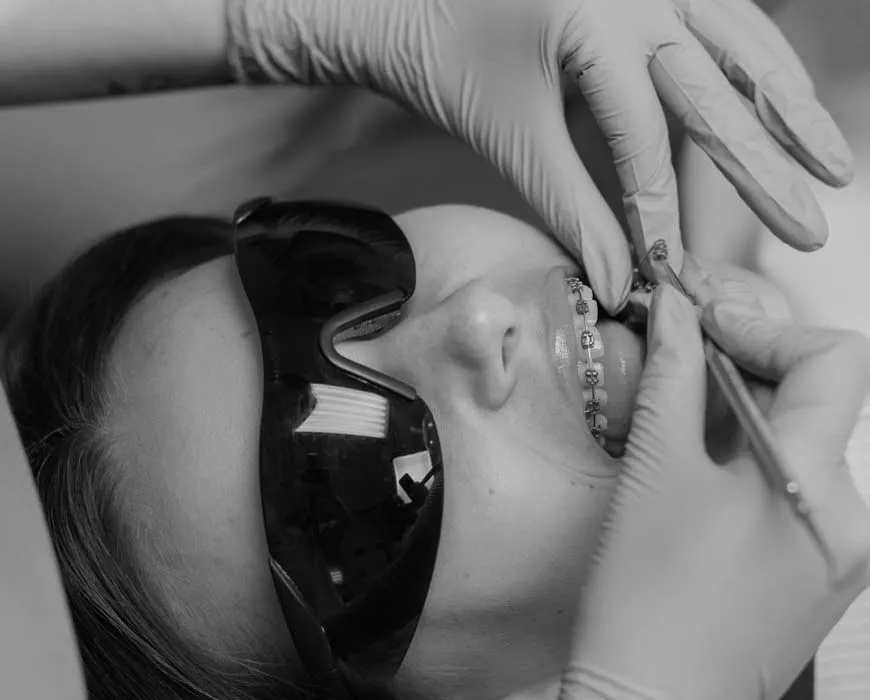
What are metal braces and why are they the most popular choice?
Metal braces are the classic and most widely used orthodontic system for correcting bite problems and straightening teeth in both adults and teenagers. The system consists of small metal brackets attached to the teeth and an orthodontic archwire that connects them. These elements are typically made from stainless steel or other durable medical-grade alloys. Metal braces remain the most widely used orthodontic treatment option both at DENTART and worldwide, accounting for approximately 80% of all orthodontic cases today. They are highly effective across a wide range of clinical situations, including complex cases, while also offering exceptional durability and a cost-effective treatment solution.
It is important to understand that the main advantage of metal braces is not simply affordability. Their greatest strength is the ability to provide highly predictable and controlled tooth movement in cases of any complexity — from mild crowding to severe bite irregularities and skeletal malocclusions. Metal braces are extremely durable, withstand significant orthodontic forces, and allow the orthodontist to precisely control every stage of tooth movement throughout treatment. Their lower cost compared to ceramic systems is an additional advantage, but their true value lies in their proven effectiveness and long-term reliability.
Metal Braces Prices in Kyiv
- Initial orthodontic consultation950 UAH
- Comprehensive initial orthodontic consultation (examination, computed tomography, diagnostic digital scanning, consultation, treatment plan development)2400 UAH
- Metal ligature braces system (1 jaw)від 18700 до 28000 UAH
- Metal self-ligating braces system (1 jaw)від 26500 до 37000 UAH


Our doctors




How do metal braces work?
Metal braces correct the bite and straighten teeth through controlled mechanical pressure that gradually moves the teeth into the correct position. Small metal brackets are attached to each tooth, and an orthodontic archwire passes through them. The archwire creates continuous gentle pressure that stimulates gradual tooth movement. To maintain stable and effective correction, regular follow-up visits with the orthodontist are necessary throughout treatment. During these appointments, the doctor adjusts or replaces the archwire to maintain the correct level of pressure and guide the teeth into their planned position. Each adjustment starts a new stage of gradual tooth movement.
At the beginning of treatment, flexible nickel-titanium archwires are usually used. These wires are highly elastic and provide gentle, gradual pressure on the teeth. During the first days after braces placement or activation, patients may feel mild pressure or temporary discomfort — this is completely normal. As treatment progresses, the archwires are gradually replaced with stronger and more rigid ones. In the final stages of treatment, stainless steel archwires are commonly used to achieve precise bite correction and detailed finishing of tooth alignment. By this stage, most patients have already adapted to wearing braces, so even stronger wires usually feel much more comfortable than during the initial phase of treatment.
What types of metal braces do we offer?
At DENTART, we offer two main types of metal braces: ligature braces and self-ligating braces. The main difference between these systems is the way the orthodontic archwire is attached to the brackets.
How we install metal braces?
The procedure for placement of metal braces begins with initial examination and diagnosis, and ends with an adaptation period, after which you get used to the system on your teeth and do not experience any discomfort. The following steps are traditionally required:
Advantages of metal braces
- Maximum treatment efficiency and the ability to correct even complex bite and alignment issues.
- Predictable results with precise control over tooth movement throughout every stage of treatment.
- Versatility — metal braces are suitable for patients of different ages and for a wide range of clinical cases.
- High durability and reliability, allowing the system to withstand significant chewing forces, reduce the risk of damage, and minimize unexpected interruptions during treatment.
- More affordable cost — metal braces are typically less expensive than ceramic braces or clear aligners.
When are metal braces recommended?
Metal braces are one of the most reliable and versatile orthodontic treatment options. They can be used for both simple and complex bite problems and are suitable for teenagers and adults alike. Metal braces are commonly recommended for:
- crowded or overlapping teeth;
- different types of bite problems, including deep bite, open bite, crossbite, overbite, and underbite;
- teeth that are rotated or significantly out of position;
- complex bite discrepancies that require precise control throughout the orthodontic treatment process;
- large gaps between teeth;
- impacted teeth (teeth that have not erupted properly) and other complex orthodontic cases that require precise and controlled tooth movement.
There are very few absolute contraindications for metal braces. Most limitations are considered relative, meaning orthodontic treatment may simply need to be postponed until certain dental or health conditions are addressed. Contraindications for metal braces may include:
- untreated tooth decay or other dental diseases;
- active gum inflammation, including acute gingivitis or periodontitis;
- serious systemic health conditions or severe medical disorders (such as cancer or certain psychiatric conditions);
- metal allergies (a rare contraindication);
- the absence of a large number of teeth;
- poor oral hygiene.
Before starting orthodontic treatment at DENTART in Kyiv, every patient undergoes comprehensive diagnostics, including CBCT imaging, digital scanning of the dental arches, and cephalometric analysis (TRG) to assess the condition of the entire dentofacial system. Professional oral hygiene is also performed prior to treatment to ensure safe planning and a predictable orthodontic outcome.
Care for metal braces — guidelines for the best treatment results
Proper care while wearing metal braces is essential for maintaining healthy teeth and gums, as well as ensuring effective orthodontic treatment without unnecessary interruptions. Basic oral hygiene recommendations include:
- brushing your teeth after every meal;
- using special interdental brushes for braces to clean around brackets, archwires, and other hard-to-reach areas;
- using a single-tuft toothbrush for precise cleaning of each tooth;
- using dental floss and an oral irrigator to clean between teeth and remove food debris.
It is also recommended to limit very hard and sticky foods to help protect the braces from damage. Regular visits to the orthodontist and dentist, including professional oral hygiene appointments, are an important part of successful orthodontic treatment.
-
What is the difference between metal, ceramic, and sapphire braces?
The main difference lies in the material used to make the brackets. Metal braces are made from medical-grade stainless steel, ceramic braces are designed to match the natural tooth color, and sapphire braces are made from transparent sapphire material. Metal braces are more visible on the teeth, but they are also stronger, more durable, and more affordable. In addition, they are considered one of the most effective options for correcting complex bite problems.
-
Which is better — metal braces or aligners?
There is no universal answer, as the best option depends on the individual clinical case. Orthodontists choose the most suitable treatment method for each patient. In general, metal braces are often recommended for more complex bite corrections, while clear aligners may be suitable for mild to moderate cases or when aesthetics are a priority. Metal braces are typically more affordable, while aligners offer greater comfort because they can be removed while eating and brushing teeth.
-
What is the difference between ligature metal braces and self-ligating metal braces?
The main difference lies in the way the archwire is secured to the braces. Ligature metal braces use elastic ligatures (small rubber bands) to hold the archwire in place. These ligatures are more visible on the teeth, create greater friction during tooth movement, and require more frequent adjustment appointments — typically once a month. Self-ligating metal braces do not use elastic ligatures. Instead, they feature a built-in clip or sliding mechanism that secures the archwire within the bracket. This design provides greater comfort, requires fewer orthodontic visits (usually every 6–8 weeks), and may allow for more efficient tooth movement and shorter treatment times. However, self-ligating systems are generally more expensive than ligature metal braces.
-
Why are metal braces more affordable than ceramic braces?
Metal braces are made from stainless steel, a durable and widely available material that is less expensive to manufacture. Ceramic braces require more complex production processes and materials, which increases their cost. While ceramic braces are more aesthetic, metal braces are generally stronger and more resistant to damage.
-
How long does treatment with metal braces usually take?
Bite correction with metal braces typically takes between 1 and 2 years, which is generally somewhat faster than treatment with ceramic braces. In mild cases, braces typically need to be worn for about one year, while more complex cases may require treatment for over two years. The duration of orthodontic treatment depends on the type and severity of the bite problem, the overall condition of the teeth and supporting bone structures, adherence to scheduled orthodontic appointments, and compliance with all of the orthodontist’s recommendations. Individual biological factors also play an important role, as the rate of tooth movement varies from person to person.
-
How often should patients visit the orthodontist during treatment?
Follow-up visits are usually scheduled every 1–2 months. Traditional braces generally require adjustments every 4–5 weeks, while self-ligating braces may only require visits every 8–10 weeks. The exact schedule is always determined individually by the orthodontist.
-
Is it painful after braces are placed?
After metal braces are placed, patients commonly experience pressure, soreness, or increased tooth sensitivity. These sensations usually last for 2–3 days, although some patients may need slightly longer to adapt. After adjustment appointments, mild pressure may return temporarily, but it is usually less noticeable and resolves more quickly.
-
What happens after metal braces are removed?
Immediately after metal braces are removed, any remaining adhesive is cleaned off, the enamel is polished, and professional dental cleaning is recommended. The retention phase also begins at this stage to stabilize the treatment results. Usually, a fixed retainer — a thin wire — is bonded to the inner surface of the teeth, and a removable night guard is made to be worn during sleep. These appliances are essential because they help prevent the teeth from shifting back to their original position.
-
Are metal braces suitable for adults over 30 or 40?
Yes, metal braces are suitable for correcting bite issues in patients over the age of 30–40. In general, age is not a limiting factor for orthodontic treatment or the use of metal braces. Any contraindications are typically related to the condition of the teeth, gums, or certain overall health factors rather than age itself. Metal braces provide some of the most predictable orthodontic outcomes and are particularly effective for adults with complex bite problems and significant tooth alignment issues.
-
At what age can children start treatment with metal braces?
The standard age for starting treatment with metal braces is between 11 and 13 years old, when most, if not all, permanent teeth have erupted. In certain cases, an orthodontist may recommend beginning treatment earlier (around ages 9–10), provided there are specific indications identified through a comprehensive diagnostic assessment. Key factors in determining whether a child is ready for braces typically include the eruption of the second molars (“7s”) and the condition and maturity of the enamel, ensuring it is suitable for secure bracket bonding.
-
Can metal allergies be a contraindication for braces?
Yes, a metal allergy can be a contraindication to conventional metal braces. However, this is relatively rare, and most patients experience no issues or adverse reactions with metal orthodontic appliances. When allergies do occur, they are most commonly associated with nickel, a component of stainless steel used in many braces systems. A metal allergy does not mean that orthodontic treatment is impossible. In such cases, orthodontists can recommend alternative hypoallergenic options, such as titanium braces or ceramic braces without nickel-containing slots, allowing patients to undergo safe and effective bite correction.
-
How should you care for metal braces, and what can and can’t you eat?
Proper oral hygiene and mindful eating are essential when wearing metal braces. While metal braces are durable and reliable, it is best to avoid or be cautious with very hard foods. For example, apples and hard vegetables should be cut into small pieces rather than bitten into whole. Chewing gum, caramel, toffee, popcorn, and snacks with small hard particles are also not recommended, as they can damage the braces or become trapped around them. Immediately after an adjustment appointment, it is advisable to avoid foods and drinks with extreme temperature contrasts, as well as very hot or very cold foods. Good oral hygiene should include regular tooth brushing—ideally after every meal—along with the use of dental floss, interdental brushes, and/or a water flosser (oral irrigator).
-
Can you kiss while wearing metal braces?
Yes, kissing is perfectly safe while wearing metal braces. Modern braces are designed with smooth, rounded edges, making the risk of injury very low. Any discomfort is usually limited to the first few days after placement, while the teeth and oral tissues are adjusting to the braces. After this adaptation period, braces generally do not interfere with kissing or other normal daily activities.


