


Ceramic crowns
Metal-free (also known as all-ceramic or simply ceramic) crowns are among the most solid, long-lasting and aesthetically pleasing. By choosing them, you get a new fully functioning tooth that does not differ from a real one. At DENTART, we place ceramic crowns both on existing teeth and on implants.
By contacting our clinic, you are choosing the best orthopaedic dentists in Kyiv. Our specialists will do all the work, including dental treatment and minimal grinding (preparation). Afterwards, our dental technicians will make a perfectly fitting crown for you with benchmark precision.
Make an appointment
Price
- Initial prosthodontist consultation950 UAH
- Comprehensive initial prosthodontic consultation (examination, CT scan, diagnostic digital scanning, consultation, treatment planning)2400 UAH
- Full-contour zirconia ceramic crown CADвід 10800 UAH
- Zirconia ceramic crown with porcelain layeringвід 12800 UAH
- E-max ceramic crown — framework with subsequent veneeringвід 15400 UAH


Our doctors






Advantages of ceramic crowns
Which ceramic crowns can we make for you?
In Kyiv, we fit these types of crowns:
- single, placed on the teeth. These crowns are recommended when a tooth is severely damaged (50+% of the crown). Here, the crown strengthens the tooth, e.g., after root canal treatment or mechanical damage to the tooth;
- crowns on the implant. If you don't have a tooth, an artificial root is implanted first, and the metal-free crown serves as the finishing stage of the implantation;
- "bridge" on the existing supporting teeth. A ceramic crown bridge is made with the support of the adjacent neighbouring teeth. Here, the "neighbours" need to be ground down beforehand, and hygiene becomes more difficult later on. In fact, instead of a bridge, we usually recommend an implant and then a crown on the artificial tooth;
- a bridge on an implant.

-
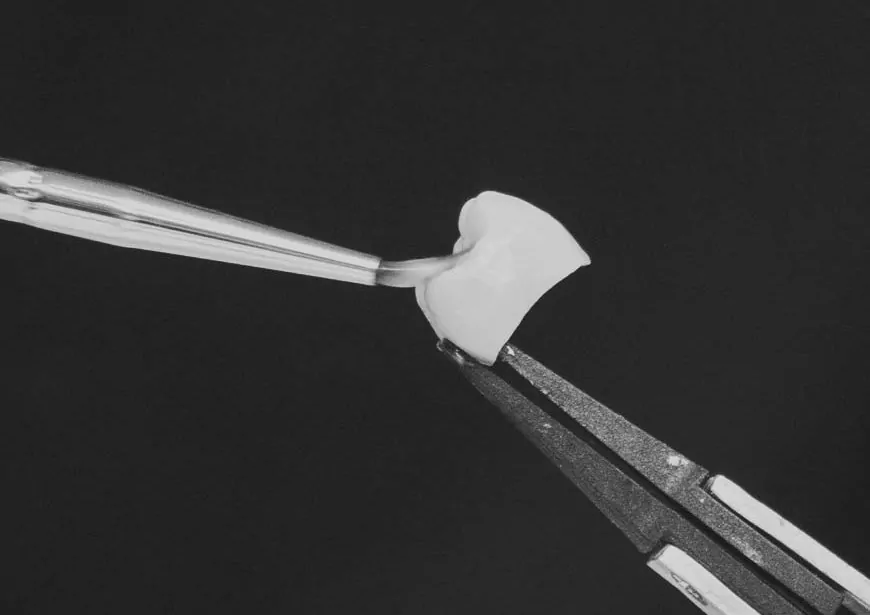
Made of ceramicManufactured by pressing lithium disilicate glass-ceramic.
-
For the smile zoneE-max crowns are the most aesthetic restorations, making them ideal for restoring anterior teeth.
-
Service life of 15 years or morePressed ceramic crowns can last over 15 years.
-
Good price for benchmark aestheticsE-max crowns are more affordable than zirconia alternatives.
-
Lower strengthCeramic crowns are considered strong, but they are not designed for the highest chewing loads and are not the best choice in patients with bruxism.
-
Made of zirconiaThe crowns are milled from zirconium dioxide and may additionally have a ceramic veneering layer.
-
For posterior (chewing) teethZirconia crowns are highly durable and can withstand significant chewing loads.
-
Longevity leaderZirconia crowns have a service life starting from 20 years.
-
High priceZirconia crowns are among the most expensive options in modern prosthodontics.
-
Do not have natural translucencyZirconia does not provide the same level of translucency as natural enamel, so for the smile zone these crowns typically require a ceramic veneering layer.
Preparation for metal-free crowns
Initially, the teeth should be treated so that the crown or bridge will last as long as possible. The first thing to do is to have a CT scan. This allows you to determine the overall condition of your teeth and mouth, and to plan all further steps.
At this stage, you and your DENTART orthopedist can decide on the type of crown. If indicated, the placement of veneers on the teeth may be suggested in individual cases.
If a tooth is missing, an implant is placed first. In other situations it may be necessary to correct a bite or misalignment of an individual tooth. Therapeutic treatment, including removal of decay, pulpitis, etc., is also performed prior to prosthetic treatment.
How ceramic crowns are placed: treatment stages
The placement of a ceramic crown at our DENTART clinic in Kyiv is a step-by-step process. It usually takes 10–14 days and requires 2–3 visits to our dental centre. Our experienced prosthodontists use advanced digital diagnostic technologies, which ensures comfort for the patient (no unpleasant conventional impressions) and guarantees high precision of the final restorations.
DENTART also offers digital smile design — an opportunity to see your future smile on photos or even “try it on” before treatment begins. Using 3D scanning, we can show you the “before and after” difference and, if needed, print a special mock-up splint that is placed over the teeth to visually demonstrate the expected result of a single ceramic crown, a bridge, or another type of restoration.
Indications for ceramic crowns
The placement of ceramic crowns is recommended in cases of moderate to severe destruction of anterior teeth. Ceramic restorations allow you to restore smile aesthetics in the following situations:
- restoration of front teeth after endodontic (root canal) treatment;
- mechanical damage — extensive fractures, large chips and other significant defects;
- severe enamel pathologies, including tetracycline staining and enamel dysplasia, where other methods (veneers, fillings, etc.) are not advisable;
- absence of anterior teeth, when prosthetics on dental implants is indicated;
- the need to replace old, outdated crowns.
The decision to use crowns rather than veneers on anterior teeth or ceramic onlays on posterior teeth, as well as the choice of optimal material (ceramic or zirconia), is made only by the prosthodontist after a clinical examination and diagnostic assessment.
Contraindications to ceramic crowns
Absolute contraindications to dental prosthetics include severe systemic conditions, such as coagulation disorders, uncontrolled diabetes mellitus and oncological diseases. Relative contraindications specifically for ceramic crowns include:
- bruxism;
- pronounced malocclusion (orthodontic treatment is recommended first);
- inflammatory gum diseases.
How to care for ceramic crowns
At-home care after the placement of a ceramic crown is very similar to routine oral hygiene. It includes brushing at least twice a day and using dental floss or interdental brushes. An irrigator and mouthwash can also be added to the routine. Professional dental cleaning is recommended every six months and can be performed at our DENTART clinic in Kyiv.
To prolong the service life of ceramic crowns, it is advisable to:
- use a toothbrush with soft bristles;
- avoid highly abrasive toothpastes;
- limit very hard and sticky foods where possible;
- give up harmful habits, especially smoking;
- avoid sudden temperature changes in the mouth (for example, don’t eat something cold immediately after a very hot drink).
More personalised recommendations will be provided by our orthodontists during your visit to the clinic.
Why is it worth having a crown fitted at DENTART?
Our patients are fitted with various types of dental crowns in Kyiv, but it is a ceramic construction of high quality. Other reasons for choosing our services are:
- our specialists are experienced orthopaedic dentists who regularly improve their qualifications and attend conferences and masterclasses abroad;
- the best dental technicians in the capital help us make the crowns, so that the finished prosthetic constructions are indistinguishable from natural teeth;
- we perform both the pre-treatment and all the other stages of preparation of the teeth for crowns with magnification. This ensures accuracy, care and maximum safety.
-
Which crowns are better: ceramic or metal?
Ceramic crowns are more aesthetic and more biocompatible with the body. Metal crowns can have an inaccurate fit to the tooth, which creates an overhanging edge, resulting in gingival discoloration, gingival trauma and gum loss.
-
How do I whiten my ceramic crowns?
Ceramic crowns are not whitened, they can be replaced with a new, lighter color.
-
How long does a ceramic crown last?
The crown is bonded to the tooth by creating a chemical bond between the ceramic, the adhesive luting cement and the tooth tissue. This bonding is completely airtight and durable.
-
How is a dental crown held in place?
A crown is attached to its own tooth or an artificial metal/zirconia core, and it is cemented in place using a special cement.
-
What are E-max crowns?
An E-max crown is a modern all-ceramic restoration that delivers benchmark smile aesthetics. This type of prosthodontic restoration is manufactured using a pressing technique with high-temperature processing. It is made of lithium disilicate glass-ceramic. Thanks to its optical properties, an E-max crown perfectly reproduces the colour, shade transitions and translucency of natural teeth, making it one of the best solutions for restoring anterior teeth.
-
Will it be noticeable that I have a ceramic crown?
No. The work of our prosthodontists at DENTART in Kyiv is designed to be imperceptible, so your friends, colleagues and others will not be able to tell the difference between a ceramic crown and a natural tooth. We carefully select the shade of the restoration to ensure a harmonious match with the enamel of neighbouring teeth. In addition, unlike metal-ceramic crowns, ceramic crowns do not cause a dark line at the gum margin that can reveal the presence of a prosthetic restoration. By choosing ceramic crowns and our services, you secure flawless smile aesthetics.
-
E-max or zirconia for anterior teeth?
For anterior teeth, that is, the smile zone, both E-max crowns and zirconia-based crowns can be used. In the case of zirconia, to achieve benchmark aesthetics and natural translucency, a bi-layer design is used — a zirconium dioxide framework covered with a ceramic veneering layer. E-max crowns are usually more affordable, which often makes them the most reasonable option for front teeth. However, zirconia restorations are stronger, so in some clinical situations the prosthodontist may recommend zirconia instead.
-
Which is stronger: ceramic or zirconia?
Zirconia is the stronger material and tolerates intensive chewing loads better than ceramic. This is why full ceramic crowns are generally not used for molars. Ceramic, however, is the best option for anterior teeth, as it replicates not only the colour but also the translucency of natural enamel. For the smile zone, crowns combining both materials can also be used — a strong zirconia framework with an aesthetic ceramic veneering layer.
-
Which teeth are ceramic crowns suitable for?
Modern ceramic crowns are ideal for anterior teeth, although overall they are quite versatile. Firstly, ceramic is used as a veneering layer in zirconia restorations and, of course, in traditional metal-ceramic crowns. Secondly, pressed E-max crowns are considered not only highly aesthetic but also sufficiently strong. That said, for molars, zirconia crowns remain the more reliable and durable solution.
-
Can E-max crowns be used on posterior (chewing) teeth?
The use of E-max crowns on posterior teeth is not excluded and is sometimes clinically acceptable. The pressing technology with high-temperature processing significantly increases their overall strength, reliability and longevity. However, as a rule, the prosthodontists at DENTART in Kyiv recommend zirconia crowns for posterior teeth. They withstand chewing loads better than E-max crowns, offer superior resistance to mechanical stress and can be used even in patients with bruxism, reducing the risk of fractures and chips that ceramic is more prone to under night-time grinding.
-
Is it painful to have ceramic crowns placed?
No. The placement of ceramic crowns (as well as crowns made from other materials) is a comfortable procedure. Tooth preparation is performed under local anaesthesia. We also use digital scanning instead of conventional impression materials, which eliminates the discomfort associated with traditional impressions. After the crown is placed, significant discomfort is very rare and, if needed, can be easily relieved with pain medications recommended by our prosthodontists at DENTART.
-
Can ceramic crowns break?
Ceramic crowns are one of the best options for aesthetic restorations, but in terms of strength and resistance to mechanical loads they are inferior to zirconia crowns. Damage, cracks, chipping and other defects may occur due to very hard foods, harmful habits (for example, frequently cracking seed shells with the teeth), bruxism and similar factors. To minimise these risks, it is advisable to use stronger zirconia crowns for posterior teeth and strictly follow all recommendations provided by our prosthodontists at DENTART.
-
What is the difference between E-max and zirconia crowns?
E-max and zirconia crowns differ in material, manufacturing technology and performance characteristics. E-max crowns are produced by pressing at high temperatures, whereas zirconia restorations are milled. E-max crowns are made from cast lithium disilicate glass-ceramic, while zirconia crowns are made from zirconium dioxide. E-max offers benchmark aesthetics, whereas zirconia provides superior strength. For this reason, E-max crowns are typically recommended for teeth in the smile zone, and zirconia crowns for posterior teeth that are subjected to higher chewing loads.
-
How long does it take to have a ceramic crown placed?
Taking into account the entire preparation process (diagnostics and fabrication of the crown in the dental laboratory), treatment usually takes between 10 and 14 days. The actual placement of the finished restoration typically takes less than one hour. The procedure is painless and comfortable, and includes several stages: removal of the temporary crown, try-in, adjustments (if needed) and final cementation with dual-cure cement.


