


Micro-prosthetics of teeth (inlays)
Micro-prosthetics in modern dentistry is the gentlest, minimally invasive method of restoring teeth to their original appearance and a beautiful smile. This technique eliminates existing cosmetic defects and completely normalises chewing function, while avoiding grinding and other damage to healthy dental tissues.
Specialists at our clinic in Kyiv install ceramic inlays that resemble natural teeth to the maximum and will last at least 10 years. We will also offer other restoration options, including veneers. The best option for a flawless smile restoration is determined by the specific sign, your wishes and your financial means.
Make an appointment
Advantages of inlay micro-prosthetics
- Higher reliability than fillings — service life typically 10–15+ years.
- Excellent aesthetics — ceramic closely matches natural enamel.
- Exceptional marginal seal — precise fit helps reduce the risk of secondary caries.
- Stable color over time — unlike fillings, an inlay does not darken.
- Minimal tooth preparation compared with full crowns.


Our doctors






What are ceramic inlays?
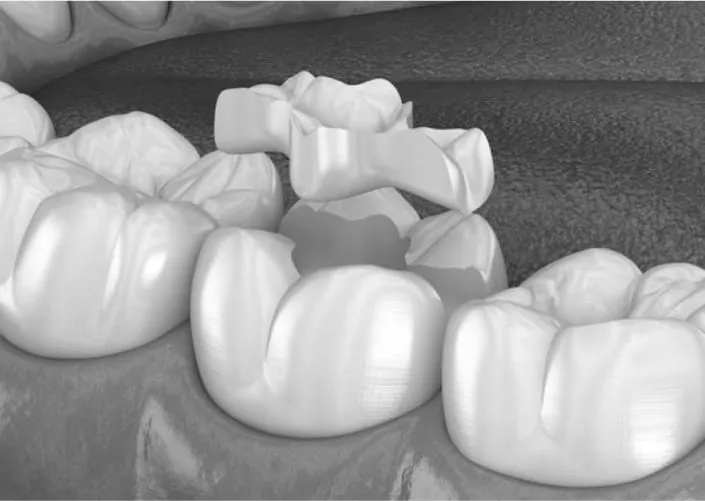
A variety of prosthetic constructions are used in micro-prosthetics. Ceramic inlays are one of the most popular solutions. A ceramic inlay is a micro-prosthesis bonded to the tooth and characterised by high strength and perfect aesthetics: it is as similar to healthy tooth enamel as possible. These inlays are superior to restorations made with a filling material, even when the most advanced and sophisticated fillings are involved.
The inlay technique is recommended for deep carious lesions and other significant damage to the crown of the tooth. The inlay is made in a special laboratory at our clinic, and the specialists' main task is to match the colour of the tooth enamel. As a result, the inlay fits perfectly into the remaining healthy tooth substance and is indistinguishable from it.
Indications for microprosthetics
The reason for fitting micro-prostheses is various defects in the teeth, namely their partial collapse because of mechanical damage and/or caries. Micro-prosthetics are used when the volume of lost tissue is too large for regular fillings.
Micro-prosthetics can correct such defects:
- chipped or cracked teeth;
- erosion of dental tissues;
- serious tooth abrasion;
- neglected caries;
- enamel colour changes;
- diastemas and dental fissures, i.e. unaesthetic interdental spaces.
Depending on the specific sign, the type of microprosthetics is also chosen. For example, inlays and onlays are often used for chipping and abrasion. Veneers are used to add aesthetics to the smile area, which effectively removes slight irregularities and diastemas.
If a tooth is missing, an implant is placed.
How are inlays better than fillings?
Micro-prosthetics has many advantages over restorations with a filling material. The main advantages of ceramic inlays include:
- increased durability and wear resistance;
- an aesthetic advantage: the inlay is as similar as possible in both colour and transparency;
- resistance to various external influences. Inlays will not turn dark because of tobacco addiction, frequent consumption of coffee or food containing dyes;
- the inlay follows the full contours of the tooth and is indistinguishable from a natural tooth;
- durability. No fillings compare to inlays in terms of their lifespan, which is usually over 10 years;
- secondary caries develop rarely under such restorations, compared to classic fillings.
The micro-prosthesis allows you to chew your food evenly and is easy to care for.

-
Fabricated in a dental laboratoryRequires 2 visits for placement.
-
Service life up to 20 yearsService life up to 15–20 years thanks to high strength.
-
No shrinkage or microcracksCeramic inlays fit precisely and are not prone to shrinkage or microfractures.
-
Excellent, stable aestheticsInlays are virtually indistinguishable from natural enamel and do not change colour.
-
More expensive than fillingsDue to the ceramic material and dental laboratory work.
-
Built up directly on the toothThe restoration can usually be completed in a single visit.
-
Moderate strengthFillings typically last around 3–7 years.
-
Bonding may deteriorate over timeMarginal adaptation is less ideal, so microcracks and material shrinkage can occur.
-
May darken over timeFillings look aesthetic initially but can become darker as years go by.
-
More affordableFillings are cheaper than micro-prosthetic restorations.
Stages of inlay placement
Inlay care
Your daily home-care routine usually does not change after ceramic inlay placement. Recommended: brushing twice a day, flossing, and additional aids such as interdental brushes, an irrigator (water flosser), and mouthwash. Professional cleaning at the clinic is also recommended every 6 months.
Because the restoration is ceramic, it is advisable to reduce excessive chewing load—specifically, to be mindful with very hard and sticky foods. If you practice martial arts or contact sports, using a protective mouthguard is recommended.
-
Can an inlay be placed on a “dead” tooth?
Different restorations can be used after endodontic treatment (nerve removal). When destruction is significant, our doctors typically recommend avoiding fillings and choosing prosthodontic restorations. A ceramic inlay may be one option; however, a crown may also be indicated—this is determined individually.
-
Is it painful to get an inlay placed?
No. Inlay placement is a painless procedure thanks to anesthesia. At DENTART, we typically use local anesthesia and, if needed, can offer other anti-stress options, such as deep sedation.
-
How long does micro-prosthetic treatment take?
In general, the process takes 7 to 14 days and requires at least 2 visits. The first visit includes caries treatment (if needed) and digital scanning. The ceramic inlay is then fabricated in a dental laboratory. At the second visit, the inlay is tried in and permanently bonded.
-
How long do inlays last?
Ceramic inlays last noticeably longer than fillings: overall longevity often exceeds 10 years and can reach 15–20 years. This is supported by a precise fit to the tooth tissues, minimal micro-gaps, and no material shrinkage.
-
Will an inlay look different from my natural teeth?
A ceramic inlay is a prosthodontic restoration that replaces lost tooth structure (from caries, chips, etc.). The shade is selected to match natural teeth, and ceramic has enamel-like translucency—so it is very difficult for others to distinguish it from natural tissues.
-
Can an inlay fall out?
A 100% guarantee is impossible, although in DENTART prosthodontic practice this happens very rarely. Similar issues can occur with fillings and crowns as well. Causes may include improper bonding, imperfect fit, or excessive bite forces (including due to bruxism or malocclusion).
-
Can several inlays be placed in one visit?
Because inlays are made in a dental laboratory, at least two visits are required. If multiple teeth need inlays, the preparation and scanning can be done at the first visit, and all inlays can typically be bonded at the second visit.


