


Veneers in Kiev
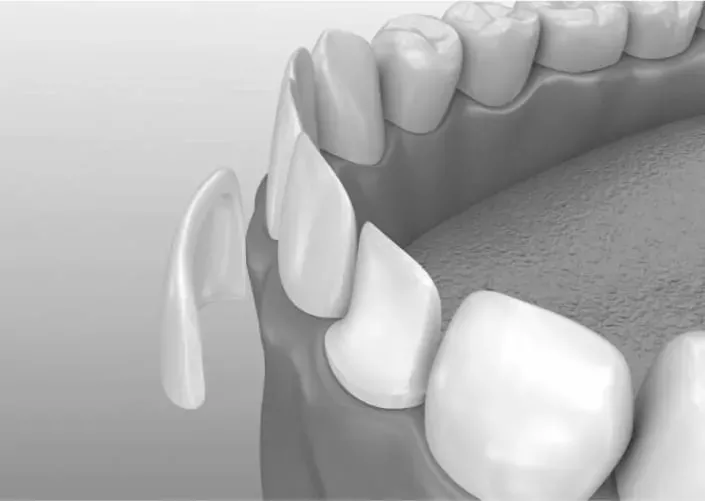
Veneers are thin ceramic onlays that are attached to your teeth, correcting their appearance. They are considered the most effective and fastest option for restoring aesthetics, creating a flawless "'Hollywood" smile.
If you are planning to get veneers in Kyiv, use the services of our DENTART Clinic. We have the best specialists in aesthetic dentistry in the country, who will do everything necessary to ensure that teeth with veneers are identical to natural teeth in shape, colour, and transparency. Gentle preparation of teeth with minimal preliminary preparation (turning) is waiting for you. We also offer the option of lumineers (ultra-thin onlays).
To make an appointment and have a thorough consultation with the orthopaedists, use the online form or contact our consultants by phone.
Make an appointment
Veneers at DENTART
We place veneers on both upper and lower teeth and guarantee their natural colour, micro-relief and shape. You get a flawless smile for many years. This is confirmed by the following advantages of our clinic in Kyiv:
- We have a team of high-class professionals, including qualified orthopaedic dentists with extensive experience in aesthetic dentistry.
- We use high-class equipment. For diagnosis, we perform a CT scan, which allows you to plan restorations and/or necessary dental treatments. We use dental microscopes to work with magnification, latex insulation (cofferdam). All this allows you to put veneers with minimal preparation of teeth.
- We use durable, time-tested materials for manufacturing veneers. As a result, you get a natural snow-white smile, and ceramic onlays on your teeth serve for over 15 years. It is not uncommon for ceramic linings to last up to 20-25 years.
- We can guarantee a comprehensive result. The placement of veneers on teeth is not only about aesthetics but also about rejuvenating dentistry and reliable protection for weakened teeth. With veneers, you look 7-10 years younger and your teeth are stronger, healthier, and more durable.
Price
- Initial prosthodontist consultation950 UAH
- Comprehensive initial prosthodontic consultation (examination, CT scan, diagnostic digital scanning, consultation, treatment planning)2400 UAH
- Ceramic veneerвід 10200 UAH
- E-max ceramic veneer — framework with subsequent veneeringвід 13200 UAH
- Veneer on a refractory modelвід 18900 UAH


Our doctors






Also, there are ultra-thin veneers and lumineers. What are they?
Ceramic veneers are also divided into several types. So, there are ultraneers, even thinner onlays on the teeth. They require minimal preparation. If desired, these veneers can also be placed on completely healthy teeth to improve their aesthetics.
Lumineers are an even thinner variation (up to 0.2-0.3 mm thick). These onlays are made from a patented ceramic that is only manufactured by the American company Cerinate. So, the original lumineers are very thin veneers for teeth, which are ordered directly from the official manufacturer. But in modern dentistry, the term 'lumineer' has become a household name, like the Xerox brand. Ultra-thin veneers, created without materials by Cerinate, are therefore often referred to in the same way.
When are veneers recommended for teeth?
You should get veneers in such situations:
- there are various dental defects. For example, veneers solve the problem of fluorosis, darkened fillings, discoloured teeth where the root canals are filled and/or tetracycline teeth, etc;
- there is increased tooth wear and tear. If the crown of a tooth is shortened, the smile's aesthetics are impaired, and thin onlays are an excellent solution;
- for injuries and chipped teeth;
- the shape of the teeth is disturbed due to various factors, such as age, bad habits. Veneers will restore the lost beauty;
- whitening does not produce the desired results;
- there are diastemas and trems i, e. undesirable interdental spaces, which are especially noticeable on the upper teeth. The alternative to wearing linings in such a case is wearing a bracket system;
- minor irregularities in the dentition should be removed. Veneers are used when there are minor defects, such as a slight malocclusion of a tooth, but when the bite is severely disturbed, special orthodontic treatment is needed.
The application of veneers on the lower and upper teeth in any of the above situations will help you regain self-confidence, get rid of psychological discomfort, smile more often and not be afraid to show your smile to others.
You should also know there are several contraindications to having veneers fitted. They are not made for children, i.e. they are not placed on baby teeth or before the bite formation period. At least, those involved in contact sports (including various martial arts) or who have bruxism (nighttime teeth grinding) should have the fitting rescheduled.
Veneers: let's look at the different types of them
Dental veneers are traditionally divided into two main types:
- prosthetic. These structures are made of ceramics, installed in 2 visits to the dental clinic, and guarantee the popular Hollywood smile;
- therapeutic. These are composite material restorations that are completed in one clinic visit.
At DENTART clinic, when we talk about veneers, we specifically mean prosthetic ceramic structures. These are truly durable and maximally aesthetic restorations that don't lose their original properties over time.
Prosthetic dental veneers are manufactured in a dental laboratory from strong ceramic materials. They are structurally very similar to natural enamel. And they're indistinguishable from your natural teeth from the outside. Another advantage of such overlays is longevity - they solve aesthetic problems for a long time (up to 20+ years).
The cost of veneers in Kyiv is higher than therapeutic (composite) ones. This is due to the difference in material costs and the need for dental technician services. In terms of color, strength, and reliability, therapeutic veneers are inferior to ceramic ones. They are a temporary solution for aesthetic problems and last on average up to 5 years.
E-max Veneers vs Composite Veneers
From a clinical perspective, the term “veneer” is most accurately applied to a ceramic E-max restoration. It offers excellent performance characteristics. An E-max veneer is a durable, reliable and high-quality solution for restoring both the aesthetics and function of anterior teeth. Composite veneers, on the other hand, are better suited as a temporary solution that can be provided in a single visit to the clinic.
Compare ceramic (E-max) and composite veneers using the table:

-
Made of ceramicManufactured using CAD/CAM technology and pressed ceramic.
-
Indirect restorationThe veneer is fabricated in a dental laboratory. Requires at least two visits to the clinic.
-
Durable and reliableA ceramic veneer can last 15 years or longer.
-
Benchmark aestheticsProvides a beautiful “Hollywood” smile and allows virtual smile preview before treatment.
-
Higher costDue to the price of the ceramic material and dental laboratory work.
-
Made of composite materialManufactured from direct composite filling material.
-
Direct restorationThe veneer is built directly on the tooth by the dentist. Can be completed in a single visit.
-
Less durableThe average service life is around 5 years.
-
High-quality aesthetic restorationBut the final result strongly depends on the dentist’s skill and precision.
-
More affordableComposite veneers are cheaper than ceramic ones.
Veneers vs Crowns
-
Made of ceramicE-max veneers are produced by pressing high-strength ceramic.
-
Covers only the facial (front) surfaceA veneer is a thin shell that covers only the facial (front) surface of the tooth.
-
More conservativePreparation for a veneer involves minimal removal of tooth structure.
-
Primarily for anterior teethVeneers are ideal for chipped enamel, fine cracks and discoloration in the smile zone.
-
Provide “benchmark” aestheticsProvide “benchmark” aesthetics and a bright, natural-looking white smile.
-
Typically last more than 15 yearsVeneers are very durable and usually cost less than crowns.
-
Made of ceramic and zirconiaModern crowns are fabricated from ceramics and zirconia-based materials.
-
Covers the entire clinical crownA crown acts like a cap that covers the entire clinical crown of the tooth on all sides.
-
Thicker than a veneerThicker than a veneer, a crown requires more extensive tooth reduction to create sufficient space for the restoration.
-
For teeth with significant destructionRecommended for teeth with significant destruction (around 50% or more of the crown), including structurally weakened teeth.
-
Combine aesthetics and functionCrowns are used for both anterior and posterior teeth; their appearance and strength depend on the material chosen.
-
Longevity ranges from 15 to 25 yearsCeramic crowns have a similar lifespan to veneers, while zirconia crowns often last 20–25 years or more.
What veneers for teeth to choose and what do the DENTART specialists offer?
Ultra-thin veneers and lumineers are considered the more prestigious options for aesthetic prosthetics, and are chosen by show business stars and other celebrities. But such dental onlays are much more expensive. Besides, they are usually a little less reliable and do not last very long. The only undisputed advantage of these thin veneers is minimal or no edging of the teeth. If this is not the most critical point for you, it is a sensible decision to opt for conventional veneers on your teeth.
The key factor is not even the type (thickness) of the veneers, but how well the specialists can fix them. We guarantee compliance with such criteria for the quality of work in Kyiv:
- transparent edge, like real upper and lower teeth;
- the micro-relief on the surface of the veneer, which we create when working under a microscope;
- the natural, non-uniform color of the onlay: the teeth are always brighter in the centre, and slightly darker closer to the gum;
- natural shape;
- healthy gum next to the veneer. As the ceramic onlay is essentially a microprosthesis covering the tooth, it needs to be fixed correctly, thus protecting the gums from inflammation.
Stages of installing veneers
We offer Digital Smile Design service. This is an opportunity for digital modeling of your future smile (even before the veneer is manufactured, you can see in a photo how your teeth will look with it). Additionally, you can get a plastic veneer for try-in. This service provides a comprehensive understanding of treatment results, allows adjustment of the restoration's shape and size before manufacturing, helps better match the overlay shade, etc.
The process of ceramic veneer installation requires at least two visits to our DENTART dental clinic in Kyiv and typically includes the following mandatory stages:


Advantages and Disadvantages of E-max Veneers
Advantages of E-max veneers include:
- Outstanding aesthetics and a naturally bright smile. In terms of colour, gloss and translucency, a ceramic E-max veneer is virtually indistinguishable from natural enamel.
- High longevity. E-max veneers typically last 10–15 years or longer.
- Correction of various anterior tooth defects, including chips, cracks, enamel discoloration, diastemas and other aesthetic issues.
- Minimal tooth preparation. Due to the small thickness of the veneer (around 0.5 mm), only a minimal amount of tooth structure needs to be removed. For example, after the veneer’s service life ends, it is still possible to place another restoration, such as a crown. In contrast, once a crown has been placed, it is no longer possible to switch to a veneer on that tooth.
- Colour stability throughout the entire service life. Veneers do not absorb food pigments and do not darken over time, unlike composite fillings.
Disadvantages of E-max veneers:
- Higher cost compared to composite restorations.
- They cannot be placed on teeth with severe structural damage.
- Relative brittleness and limited resistance to very high mechanical loads.
Contraindications for Veneer Placement
The main contraindications for veneers include:
- Severe destruction of the tooth (50% or more of the crown).
- Bruxism (involuntary nighttime grinding).
- Significant malocclusion.
- Patient age under 16 (as occlusal development is not yet complete).
Before placing veneers, it is also necessary to:
- Treat caries and any other infectious dental diseases.
- Manage gingival pathologies such as gingivitis or periodontitis.
- Restore posterior (chewing) teeth where multiple are missing.
- Select an occlusal splint (night guard) or another effective preventive measure to reduce the negative effects of bruxism.
Relative contraindications to veneer placement also include participation in high-impact sports, especially contact and combat sports (boxing, kickboxing, etc.).
How to Care for Veneers?
Oral hygiene at home after getting ceramic veneers follows the same basic principles of dental care. The following practices are recommended:
- brush your teeth twice a day — morning and evening;
- use dental floss to clean between teeth;
- additionally use mouthwash, interdental brushes, and a water flosser.
Don't assume that veneers themselves don't need cleaning and maintenance. While it's true that dental plaque doesn't accumulate on ceramic as intensively as it does on natural enamel, there are two important considerations. First, the back of the tooth isn't covered by the veneer, and plaque builds up there just as before. Second, insufficient hygiene of a tooth covered with a veneer can affect the gums and other adjacent soft tissues, as well as neighboring teeth. This is why your approach to home care must be serious and responsible.
Ceramic veneers protect teeth from mechanical stress, but they can be damaged by intense forces. Therefore, you should avoid impacts, attempting to crack pistachio shells, and similar harmful habits.
-
Veneers or crowns – which is better for front teeth?
It all depends on the clinical situation, so it is only possible to say definitively whether veneers or crowns are more suitable after a consultation with a prosthodontist. The main determining factor is usually the degree of damage to the anterior teeth. In cases of minor defects such as chips, discoloration or small cracks, veneers are generally recommended. They require only minimal tooth preparation. When a tooth is destroyed by 50% or more, a crown is usually the better option. Crowns are also typically the most appropriate choice after endodontic treatment (root canal therapy), when the pulp has been removed.
-
How long does it take to place veneers on 6–8 teeth?
Ceramic veneers require two visits, as they are fabricated in a dental laboratory. Restoring 6–8 teeth at once will usually take around two weeks in total. The actual placement of the veneers is performed during the second visit to our clinic and includes try-in and bonding with a special dental cement. For a single tooth, the procedure usually takes about 30–60 minutes; for 6–8 teeth, it may take approximately 2 hours or more.
-
What is included in the cost of veneers? Are there any additional expenses?
The cost of a veneer includes fabrication of the ceramic prosthetic restoration in the dental laboratory, as well as the work of our DENTART specialist. The dentist carries out tooth preparation, color selection using the VITA shade guide, placement of a temporary composite restoration, and other stages of treatment. Additional costs usually include mandatory diagnostic procedures such as cone-beam computed tomography (CBCT) and intraoral scanning, and, if necessary, any required therapeutic treatment. If you wish, we can also provide Digital Smile Design (DSD) and a mock-up (wax-up try-in). This service allows you to see what your new smile will look like even before the veneers are placed.
-
Is it possible to get veneers in one day?
Indirect restorations such as ceramic veneers cannot be completed in a single day or visit to the dental clinic. In one appointment, it is only possible to place a so-called composite veneer – a direct restoration made from filling material that is sculpted directly onto the tooth with an aesthetic defect. Full ceramic E-max veneers are fabricated using CAD/CAM technology in a dental laboratory, so they always require at least two visits to DENTART.
-
How long do E-max ceramic veneers last with proper care?
E-max veneers typically last more than 15 years. With high-quality home care, regular professional dental hygiene (every 6 months is recommended), and adherence to the instructions of our prosthodontists, their service life can be extended to 20–25 years. You can further prolong the lifespan of ceramic veneers by giving up harmful habits such as smoking and limiting very hard or sticky foods in your diet.
-
Do teeth get damaged under veneers?
Teeth under veneers can deteriorate, but this is by no means inevitable. Choosing experienced professionals and following their recommendations allows you to minimize this risk. Much depends on the quality of the micro-prosthetic work, the correctness of oral care and adherence to all instructions given by the dentist. Proper preparation is key to preventing problems with the tooth under the veneer, including all necessary preliminary therapeutic treatment. In the future, regular professional hygiene and timely visits to our DENTART dentists at the first sign of discomfort or suspicion of tooth decay are essential.
-
What should I do if a veneer chips or cracks?
If a veneer chips or cracks, we recommend contacting a dentist immediately. Please get in touch with our doctors and they will advise you on the next steps. If the veneer has completely debonded, it is advisable to save it: in some cases, restoring the aesthetics of your smile may be limited to rebonding the veneer with dental cement. If the veneer is cracked or fractured, it will generally need to be completely replaced.
-
Can veneers be placed if I have bruxism (teeth grinding)?
Bruxism, that is involuntary nighttime grinding or clenching of the teeth, is considered a contraindication to veneer placement. Bruxism significantly increases the risk of chipping, cracking and fracturing the ceramic. Therefore, before placing veneers, it is advisable to first address nighttime grinding with effective treatment or protective measures – or to refuse ceramic veneers in favor of stronger and more durable crowns for the anterior teeth.
-
Can veneers be placed on teeth with fillings or previous restorations?
As a rule, veneers can be used on anterior teeth that already have fillings, including relatively large ones. This approach helps improve aesthetics while preserving the function of the tooth. However, the appropriateness of veneers in such cases is determined only by the dentist. The prosthodontist will assess whether a veneer is suitable for your situation or whether a crown on the front tooth would be a better option.
-
Is it always necessary to prepare (drill) healthy teeth for veneers?
A conventional ceramic veneer is 0.3–0.7 mm thick and always requires tooth preparation prior to placement – that is, removal of a thin layer of the superficial tooth tissues (enamel). In the case of ultra-thin veneers such as lumineers, preparation may be minimal or not required at all. However, these restorations are significantly more expensive, and the number of dental laboratories that fabricate them is much smaller. In most cases, lumineers are ordered from other countries, which also increases the overall treatment time.
-
In which cases are veneers not suitable and an alternative is needed?
Veneers are not suitable for restoring posterior (chewing) teeth – they are intended only for the smile zone. Alternative solutions are also required when the tooth is severely destroyed (by 50% or more). Bruxism (involuntary nighttime grinding) is another important contraindication to veneers. Ceramic veneers are also not recommended for patients younger than 16 years, as their occlusion is still developing. In such cases, alternatives may include crowns, other fixed prosthetic solutions, or direct composite bonding (aesthetic composite restorations).
-
Can veneers be placed on teeth after root canal treatment?
After endodontic treatment, if the loss of tooth structure is minimal, both veneers and crowns can be considered. Crowns are generally the best choice in cases of significant loss of tooth tissue, as they provide the most durable and reliable long-term protection – although they are more expensive. If root canal treatment and filling were performed earlier and the tooth subsequently darkened, a veneer may be an excellent solution to restore its aesthetics. At DENTART, each case is evaluated individually, and the prosthodontist will recommend the optimal way to restore both the appearance and function of your teeth in your specific situation.


