


Digital Smile Design (DSD)
Digital Smile Design (DSD) is a service for planning and fitting the patient's future smile. For this purpose, we use modern diagnostic methods, digital dental scanning and special software. With the help of computer planning and fitting, the patient can see what their smile will look like after dental treatment, and even before bite correction, crowns, implantation or other critical manipulations begin. Make an appointment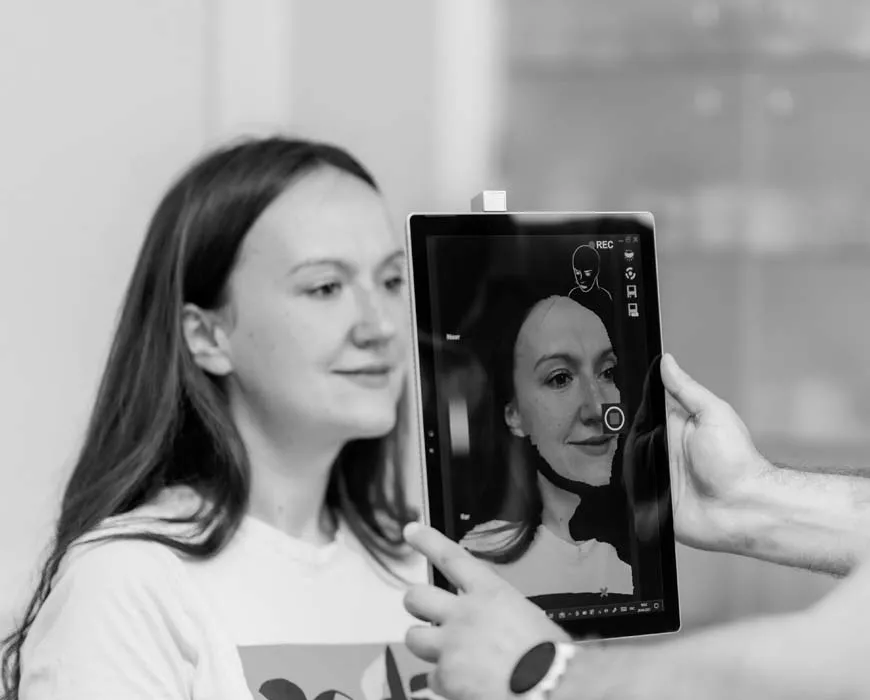


Our doctors






Smile photo protocol and why it is essential for DSD
A smile photo protocol is essentially a portrait photo session focused on your face and smile. Using a series of photos and short videos, we capture the gingival contours and teeth (their size, height, width, symmetry) as well as other individual features. All of this is recorded from different angles which, together with additional digital scanning, allows us to create a 3D visualization of your smile.
What does a photo protocol provide in Digital Smile Design?
- Greater precision in treatment planning, including evaluation of the smile line, tooth proportions and symmetry.
- Visualization of the treatment outcome. Based on the photo protocol, a DSD project is created to show what your future smile may look like.
- More effective communication. It is much easier for a patient to express their expectations when they can see their own photos. A person can say, “This tooth looks too wide,” or “I don’t like this shade here.” As a result, the dentist and dental technician can take these comments into account and design the most appropriate crowns, veneers and other restorations.
- Monitoring changes. By comparing photographs (before, after the first project, after modifications), it is easier to understand which version should be the final one. This visual clarity is convenient for both the patient and the dentist.
DSD planning for veneers
Ceramic veneers are used to correct defects of the anterior teeth — chips, enamel cracks, minor bite imperfections (such as diastemas), and other aesthetic concerns. Since the main goal of veneer treatment is a flawless smile, Digital Smile Design often helps to achieve not just a good, but the best possible aesthetic result.
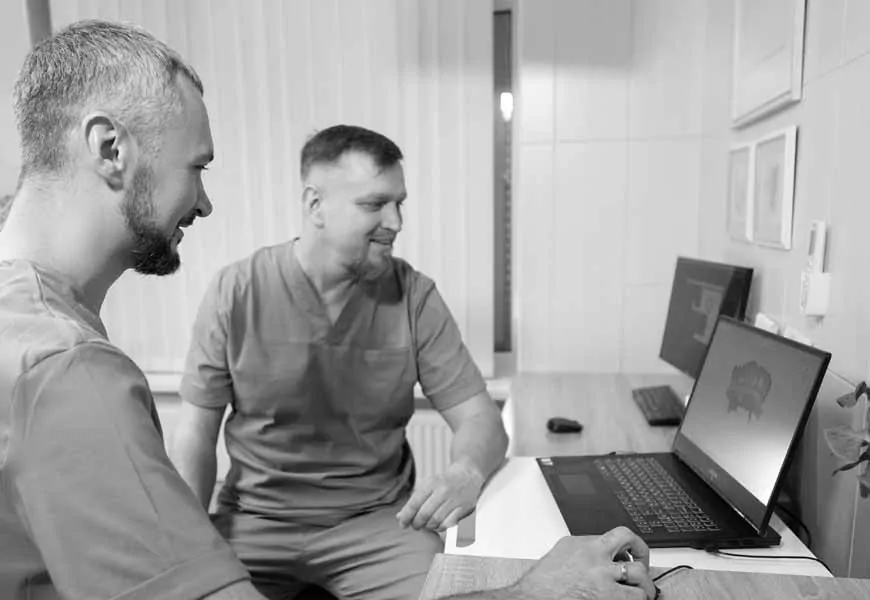
DSD makes it possible to determine the optimal shape, length, position and shade of the veneers even before treatment begins and before the restorations are fabricated in the dental laboratory. The photo protocol and 3D scanning are used to create a digital mock-up of the teeth and future restorations, which can be assessed on photographs or even as a physical model. This approach allows for adjustments and improves the final outcome.
If you are not fully sure how your smile will look after veneer placement, computer-based smile simulation at DENTART is an effective way to avoid mistakes and disappointing aesthetic results.
Digital Smile Design before implant-supported prosthetics
Digital Smile Design is widely used by prosthodontists when planning implant-supported restorations. By “trying on” the future smile, the patient can see the expected aesthetics of crowns, bridges or other prostheses even before the surgical phase — implant placement.
Because implant-supported treatment is relatively costly and not very fast, DSD often helps to dispel doubts and make a well-informed final decision.
At our DENTART clinic in Kyiv, we primarily recommend Digital Smile Design to patients before implant-supported restorations in the anterior region — for both single-tooth cases and complete edentulism. Before treatment starts, the patient and dentist can choose the shape and size of the teeth, the height of the gingival contour and the desired shades.
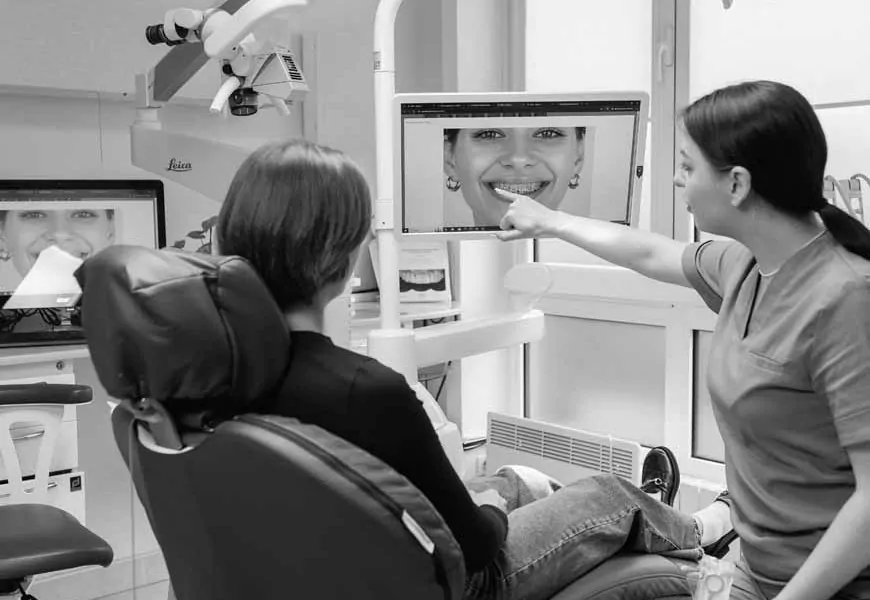
DSD for planning orthodontic treatment (braces, aligners)
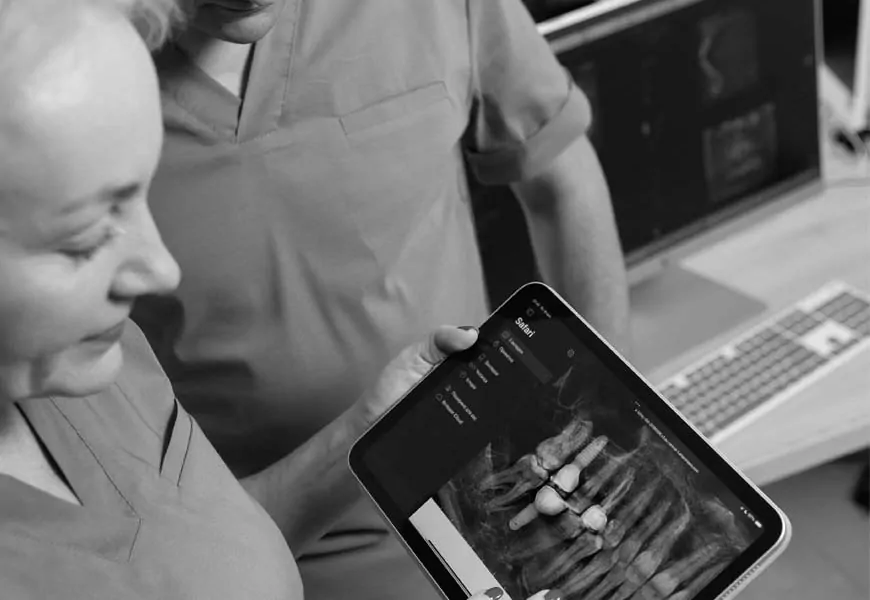
3D smile visualization is most commonly used in prosthodontics and implant dentistry, but it can also be a valuable tool in orthodontic treatment. As in other cases, DSD visualizes the expected results before braces are placed or aligners are manufactured. Based on the photo protocol and 3D scanning of the oral cavity, the orthodontist can model the position of the teeth once the bite defects have been corrected.
In orthodontic treatment, we generally recommend Digital Smile Design in cases where prosthetic work is also planned later on. In this way, the patient receives a visualization of the future smile both after bite correction and after placement of crowns, veneers and other restorations. The diagnostic data and selected DSD project also help to coordinate the work of all specialists involved — orthodontist, surgeon and prosthodontist.
STAGES OF CREATING A FUTURE SMILE
At the DENTART clinic, we offer two versions of the Digital Smile Design service: only digital smile planning and with the direct fitting of plastic veneers in the oral cavity. They differ only in the last stage. Let's take a closer look at all the components of our services.
Consultations with specialists
At first, the dentists of our clinic in Kyiv communicate with the patient. Examination and consultations are carried out by various specialists of DENTART, ranging from a therapist to an orthopedist, orthodontist, and gnathologist. For example, the general practitioner conducts an initial assessment of the condition of the teeth and gums, asking about the patient's complaints and expectations. The orthodontist identifies any problems with the bite that should be taken into account before planning an aesthetic restoration. The periodontist checks the condition of the gums, other soft tissues, and bones, and the gnathologist checks functional disorders of the dentition.
The main task of the first stage is to determine the condition of the teeth and gums, identify hidden problems, and find out all the patient's wishes and expectations from the upcoming treatment.
Diagnostics of the oral cavity
The next stage of Digital Smile Design includes a set of diagnostic procedures. To plan the future smile, we perform computed tomography (CT), teleradiography (TRG) as well as digital scanning of the oral cavity. CT and TRG scans help our dentists to obtain accurate information about the state of the patient's dental system, in particular the bone tissue of the jaw. Digital scanning is a series of high-precision photographs of the oral cavity from different angles. Based on this "photo session", a virtual model of the teeth is created, which can be printed on a 3D printer to demonstrate the existing problems to the patient and justify the optimal treatment methods.
After a comprehensive diagnosis, it is possible to determine the necessary methods of therapy, as well as to accurately design what the patient's smile will look like before their direct implementation.
Computer planning
Using a digital scan, our dentists create a three-dimensional model of the patient's current smile. And with the help of special software, changes are made to it to show what will happen after treatment. Together with the patient, the doctor can change the location, size, and shape of the teeth in the software, choose a more suitable enamel tone, and adjust the relationship between the lower and upper jaw.
The result of the joint design work is a model of the future smile that reflects the results of the proposed treatment. A photo of this model is printed and provided to the patient.
Trying on a Digital Smile Design smile
Based on the digital design of the future smile, a physical model can be created. For these purposes, we at DENTART make temporary veneers. They are directly put on the teeth, which means that they allow you to try them on. The patient can look at himself in the mirror, and we will take a series of additional photos for even greater clarity.
The fitting gives you a truly complete picture of what awaits you after comprehensive treatment and how your teeth, face shape and overall appearance will look. There is usually no doubt about the need for treatment, and the final decision you make will be as informed as possible.
What are the limitations of DSD – what can it not predict?
Digital Smile Design is a powerful tool for planning dental treatment, but it does have limitations. In particular, DSD cannot predict:
- Biological tissue responses (gums, bone and other structures).
- Exact tooth movement, force vectors and occlusal details. Other diagnostic tools are required to determine biomechanics.
- Long-term changes. The smile after prosthetic treatment is not static. Over time, hygiene, harmful habits and natural ageing all affect the appearance of the teeth.
- Perfectly accurate shades. The actual colour of restorations may differ slightly from the digital visualization, for example due to different lighting conditions.
- Individual perception. A patient’s sense of aesthetics may change over time — something that DSD cannot foresee.
-
Why is smile design needed?
Digital Smile Design (DSD) is a 3D visualization of your smile — an opportunity to see what your teeth will look like after treatment already at the planning stage of implant placement and prosthetic rehabilitation. Computer-based smile design helps the patient avoid discrepancies between expectations and what modern dentistry can realistically offer, and ensures that the final result will be aesthetic and aligned with your wishes.
-
How long does DSD planning take?
Digital Smile Design usually takes from a few days up to about a week, depending on the current workload of our DENTART team. During the first visit we can perform the photo and video protocol, digital scanning and even create a quick preliminary digital smile simulation. However, if we are talking about a detailed 3D design with precise proportions and full consideration of your individual features, it is typically ready by the second visit (in a few days). The same applies to a full mock-up try-in: fabricating a physical model also takes some time.
-
Is DSD mandatory before prosthetic treatment?
No, Digital Smile Design is not a mandatory step. It is a modern technological tool that helps the patient better understand what the treatment outcome will look like. For the dentist, DSD is also very useful because it allows the final result to be brought as close as possible to your expectations – but high-quality prosthetic treatment can also be carried out without digital smile design.
-
What is the difference between DSD and conventional treatment planning?
3D smile visualization provides much more illustrative treatment planning: the patient can clearly see what they are expected to get in the end. DSD also improves communication with the dentist, making it easier to find the option that best matches your expectations in terms of shade, shape and size of the restorations, and overall smile aesthetics. Conventional planning is less visual and less individualized, but it is usually more affordable and allows treatment to be started sooner.
-
How accurately can DSD predict the final treatment result?
Digital Smile Design cannot guarantee a 100% match between the digital project and the final clinical result. In practice, it is realistic to achieve a 95% or higher degree of correspondence. Any differences are typically imperceptible: deviations in tooth dimensions or positions are within fractions of a millimetre. A perfect 100% match is impossible because biological tissue responses cannot be predicted with absolute precision, and minor adjustments may arise during treatment, along with other clinical nuances.
-
Can changes be made to the DSD project after the first presentation?
Yes. Adjustments are not only possible, they are recommended if there is anything you do not like. This is exactly why the virtual smile try-in is done. You can modify the shape, height and width of individual teeth, the shade, gingival contours and other parameters. As long as the final version has not been approved and treatment has not started, new changes can be introduced.
-
Is DSD used for orthodontic treatment planning (braces)?
Yes, Digital Smile Design can be used when planning bite correction. With DSD we create a 3D model of the dentoalveolar system and visualize what your smile is expected to look like after treatment with braces or aligners. In addition, digital planning is recommended in complex cases where prosthetic treatment is also anticipated after orthodontics.
-
How does DSD work in planning gingivoplasty (gum contouring)?
Digital Smile Design helps identify excess gingival tissue, asymmetries and the optimal clinical crown length of the teeth. This makes it possible to plan gum correction and show the patient in advance what the new gingival contour and smile will look like. Together with the patient, the dentist determines the ideal gingival height, proportions and symmetry. As a result, gingivoplasty outcomes become more predictable and as aesthetic as possible.
-
Does digital smile design help in choosing tooth shape and shade?
Yes, DSD helps determine the future shape and colour of the teeth after restoration. The dentist and patient can review intermediate and final (approved) variants on photographs or even during a mock-up try-in, before treatment begins. However, the capabilities of DSD go far beyond simply selecting shape and shade — it is a comprehensive tool for planning the entire aesthetic concept of the smile.
-
Is DSD included in the “turnkey” implant treatment package?
No, Digital Smile Design is not a basic component but an additional service for advanced planning of prosthetic treatment, including implant-supported restorations. It is recommended for patients who are unsure about which treatment option to choose, who are not fully clear about what exactly the treatment will provide, or who want to better understand the expected aesthetic outcome.
-
Can I show my DSD project to family members before making a decision?
Yes, you can absolutely share the 3D smile visualization with your family or close friends if you would like their opinion. They can help you decide which version of your future smile they like more. This is often a very good way to make a final, confident decision if you still have doubts.


